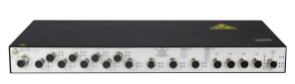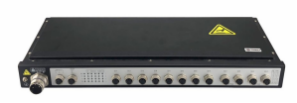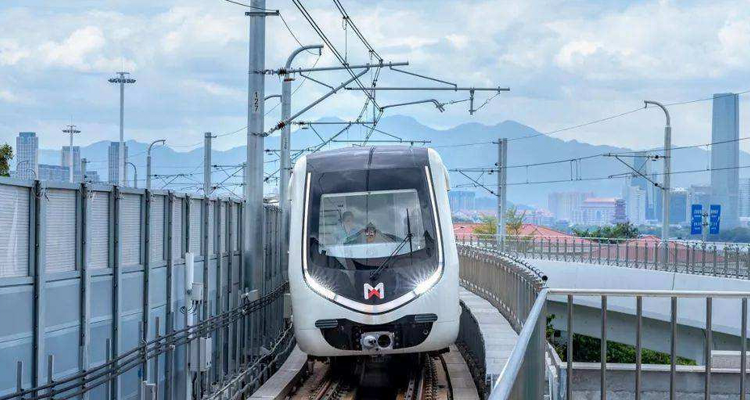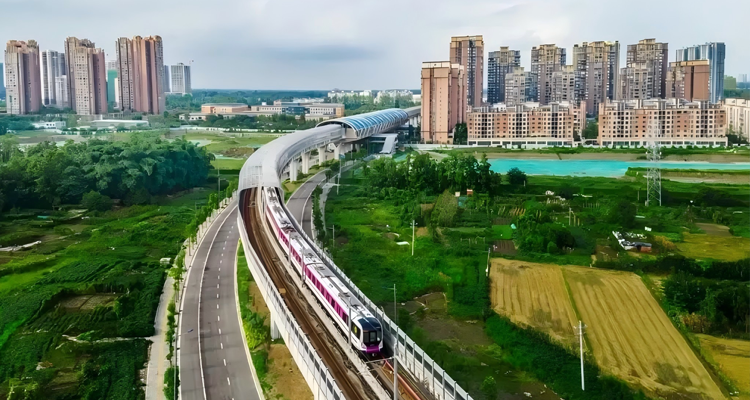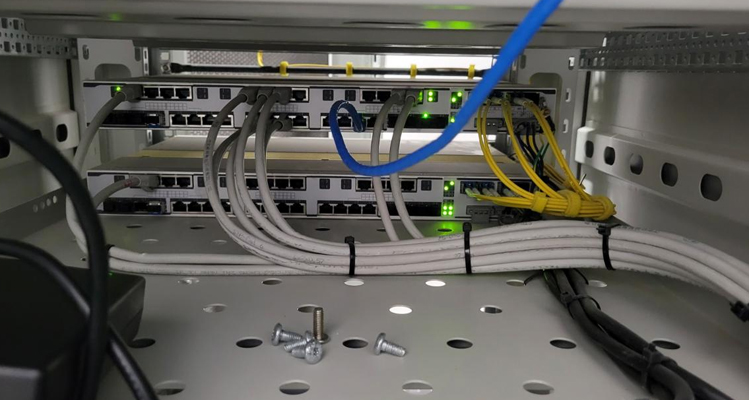
MRD has deep expertise in the rail transit industry, delivering full-scenario PIS network solutions – from classical high‑reliability redundant ring networks to ETB (Ethernet Train Backbone) networks compliant with the IEC 61375‑2‑5 international standard. Our TCC series industrial switches have been successfully deployed in benchmark projects such as Shanghai Metro Line 10. By supporting key technologies including TTDP (Train Topology Discovery Protocol) for dynamic consist, BYPASS power‑off bypass, and M12 high‑protection connectors, they address long‑standing pain points like manual reconfiguration after train re‑consisting, complex O&M, and excessive inter‑car cabling. This enables plug‑and‑play onboard networking and reliable operation throughout the entire lifecycle.
Passenger Information System (PIS) serves as the information hub of trains, and its onboard network must simultaneously carry mixed services including video surveillance, public address/intercom, arrival information, real-time passenger flow, and more. However, traditional solutions present four major challenges to both operators and integrators:
Grouping is not flexible
When using the jump ring network, the train reorganization must maintain a fixed carriage order and cannot be flexibly mixed.O&M up to this high
The IP of the equipment is for a fixed configuration. If you replace a camera or switch, you need to manually reassemble the parameters. The annual maintenance work of a train adds dozens of man-days.Cables are complicated
There are many jumpers across carriages, which increases the number of fault points and makes troubleshooting difficult.standard inconsistent
Early plans mostly used private redundant protocols, and equipment interoperability between different manufacturers was poor.
Two proven schemes for new lines (latest international standards) and retrofit lines (compatible with existing rings).
The first industrial Ethernet in-vehicle network line was adopted in 2007, when ETBstandard was not yet mature.
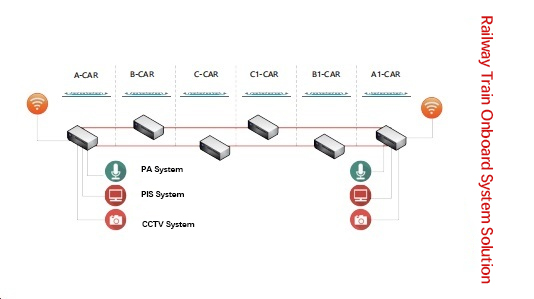
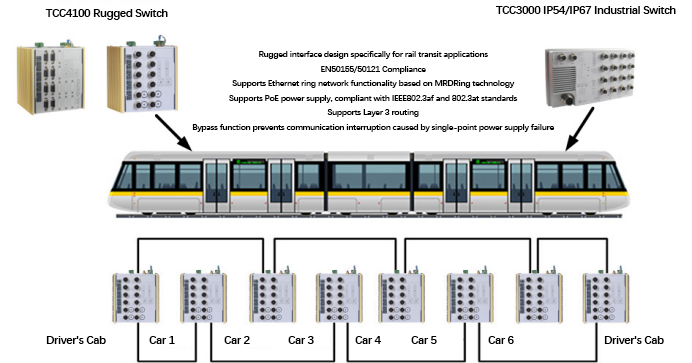
The redundant ring network is formed by cross-cabin network cable hopping, and Layer-3 routing + NAT is enabled on the front/rear switch.
When the ring network self-heals between < 50ms, continuous and stable operation for more than 15 years, verifying the high reliability of the product.
The needle for operation and maintenance found that the grouping is not flexible and the IP configuration is cumbersome. MRD™ Meridian ® has recommended an ETB-based transformation scheme to the line.
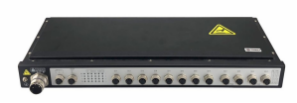
MRD-Ring® Ethernet ring with node self-healing <5 ms and ring self-healing <50 ms (typical); IEC62439 MRD ring media redundancy; any two ports can form rings with multiple independent rings; Layer-2 QoS
More| Products | Critical capability | Sort | Descriptions |
|---|---|---|---|
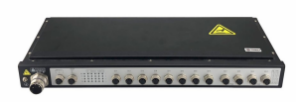
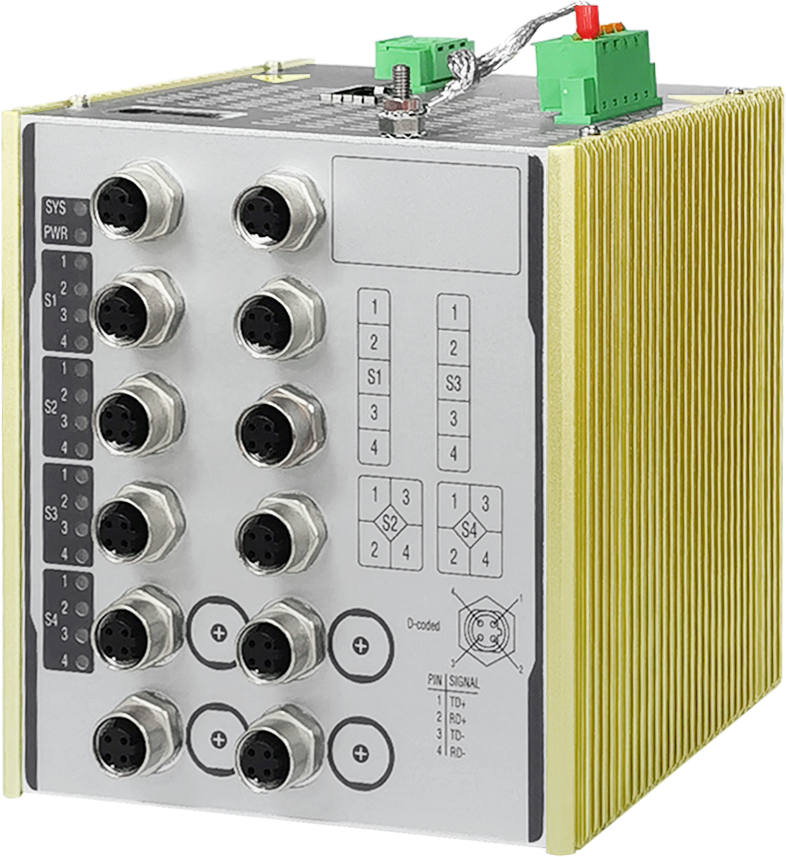
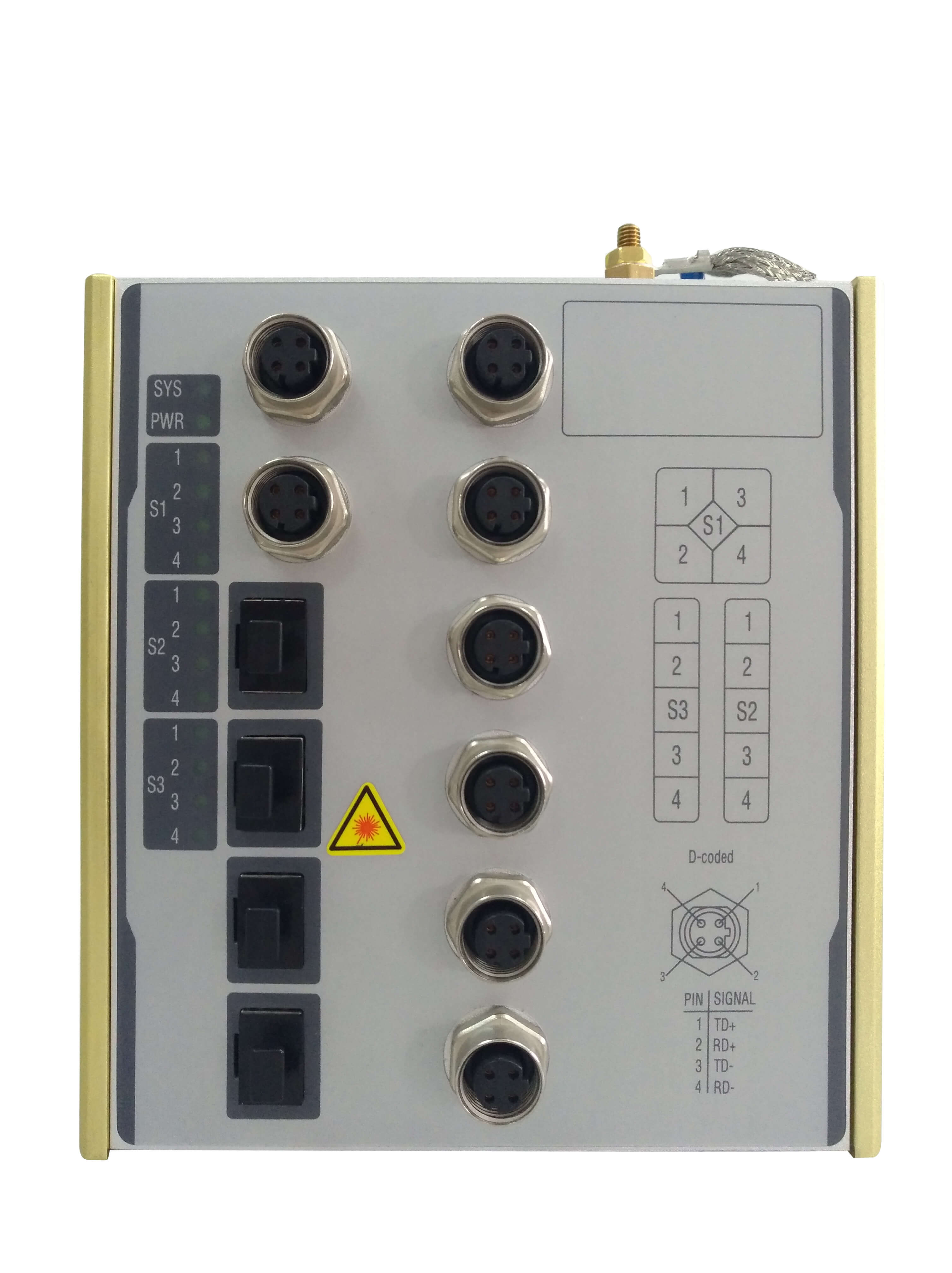
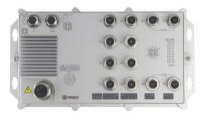
| TCC4100 series railway train on-board industrial switch | Supports Ethernet ring network function based on MRD-Ring ® technology, nodes self-healing time under 5 milliseconds, ring network self-healing time under 50 milliseconds (typical value) Supports IEC-based... | eth-poe | See product details |
| TCC4100 Series Railway Train Car IP54IP67 Switch | Supports up to 8 PoE ports Supports Ethernet ring function based on MRD-Ring ® technology, supports multiple self-healing rings, nodes self-healing time under 5 milliseconds, ring network self-healing when... | eth-poe | See product details |
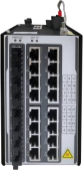
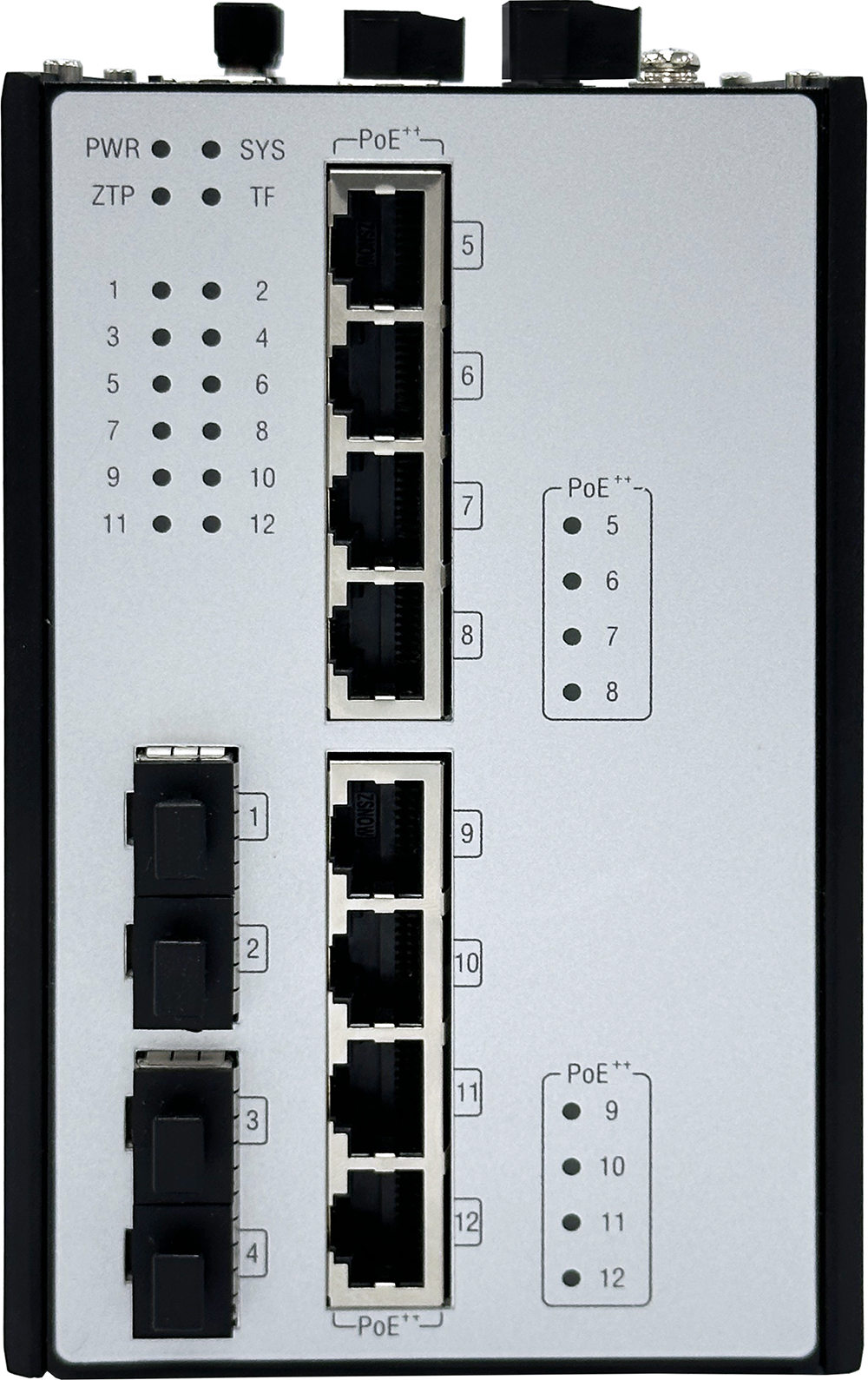
| TCC4100 series 24-port high-end Din-RailLayer-3industrial switch | Supports 24 Ethernet ports, including 8 2.5g SFP fiber ports Any two ports can be used to form a self-healing ring network, and supports multiple independent self-healing rings... | eth-l3-mgt | See product details |
| TCC4100 Firm Interface Din-Rail Switch - Gigabit | Backplane bandwidth up to 68Gbps Supports Ethernet ring network function based on MRD-Ring ® technology, supports multiple self-healing rings, nodes self-healing time under 5 milliseconds, ring network self-healing... | eth-l3-mgt | See product details |
Every solution is built on relentless pursuit of product fundamentals. We disclose the following design details for the most demanding engineering review:

MTBF (Mean Time Between Failures)
Device-level stress prediction based on the SR-332 algorithm; system MTBF exceeds one million hours.
Service Life
Not only datasheet ratings—measured estimates based on electrolytic capacitor capacitance fade at minimum operating parameters @ operating temperature.
Offers classic rings and standard ETB schemes for brownfield and greenfield projects.

TCC4100 is among China's first industrial switches to pass IEC 61375-2-5 conformance.

Every design detail—from fan airflow to electrolytic capacitor selection—comes from 15+ years of rail field experience.

End-to-end support from network design and delivery to O&M training.
Hotline: 86-21-58330762
Zip: 201203
Email: sales@mrdcom.net
Address: No.123 Curie Road, China (Shanghai) Pilot Free Trade Zone




Copyright 2026 MRD Co LTD . All Rights Reserved Shanghai ICP No.12035199

Based on industrial Ethernet redundant rings (self-healing <50 ms)—a long-proven mature choice.
| components | Configuration points | MRD Advantage |
|---|---|---|
| Vehicle backbone network | One switch per train, redundant ring network formed by jumper network cables | Self-healing when interval ≤ 50ms to ensure business continuity |
| Head/tail switch | Layer-3 routing + NAT | Supports cross-segment communication, isolating train-level and cabin-level broadcast domains |
| physical interface | The whole vehicle adopts M12 interface, and the equipment Protection rating ≥ IP54 | Anti-vibration, dust-proof and waterproof, suitable for harsh vehicle environments |
| can reliability basis | Component selection based on high MTBF/long life | MTBF is designed according to SR-332standard, and the life is calculated based on the operating temperature electrolytic capacitor bottleneck |
Applicable scenarios: existing line PIS system transformation, low capacity rail transit (such as trams), for dynamic grouping without rigid requirements.
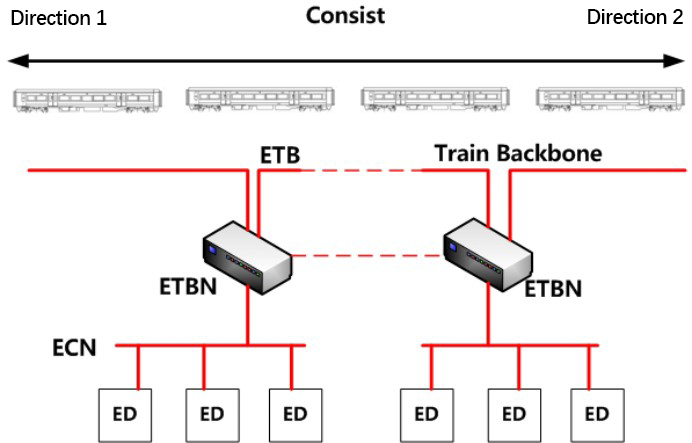
Fully compliant with IEC 61375-2-5—preferred for new metro and regional trains. Defines ETB and introduces TTDP for intelligent networking.
Traditional solution:After reorganizing the carriage, it is necessary to manually record the new topology and modify the switch configuration.
MRD ETB Solution:Each time the system is powered up, the TTDP protocol runs automatically, passes multicast mode to exchange topology information, automatically calculates all subnet identification numbers and backbone node identification numbers, and completes IP mapping and DHCP/DNS/NTP service updates. The carriages are randomly grouped, and the network automatically adapts.
The ETB train network is divided into independent Layer-3, and the functions of each layer are decoupled:
Train backbone layer (ETB):Connect the carriages, run TTDP, and adopt a linear topology (each node only communicates with left and right neighbors).
Car Network Layer (ECN):Separate LAN for each car part, compliant with IEC61375-3-4.
Terminal device layer:Cameras, displays, broadcast terminals, etc.
Value: One car network storm will not spread to the whole train.
The protocol defines five types of data and assigns different priorities to ensure that the control instructions are not interfered with by the video stream:
| data type | Typical applications | maximum delay | priority |
|---|---|---|---|
| regulatory data | TTDP, initial network operation | - | Highest |
| process data | Traction/braking/door control | <20ms | high |
| message data | Emergency for speaking and writing this information | <100ms | height |
| streaming data | CCTV video, live streaming | <125ms | |
| Do your best for data | Software upgrades, logging | Do your best for | Low |