
Published: 2026-07-03
The communication network of the Automatic Fare Collection (AFC) system in urban rail transit is the “invisible lifeline” for the stable operation of ticketing services – its importance is self‑evident, yet truly ensuring the reliability of every single node puts the equipment selection and system design to the test.
During the construction of the AFC system for Xiamen Metro Line 6, MRD industrial Ethernet switches from Shanghai MRDCom Co., Ltd. successfully met the full‑hierarchy network challenges from the aggregation layer to the access layer. They built a stable and reliable AFC communication foundation for this important line connecting Xiamen Island with its outer areas, and also provided a practical reference model for the selection and deployment of communication equipment in rail transit AFC systems.
I. Project Background: Overview of the AFC System for Xiamen Metro Line 6
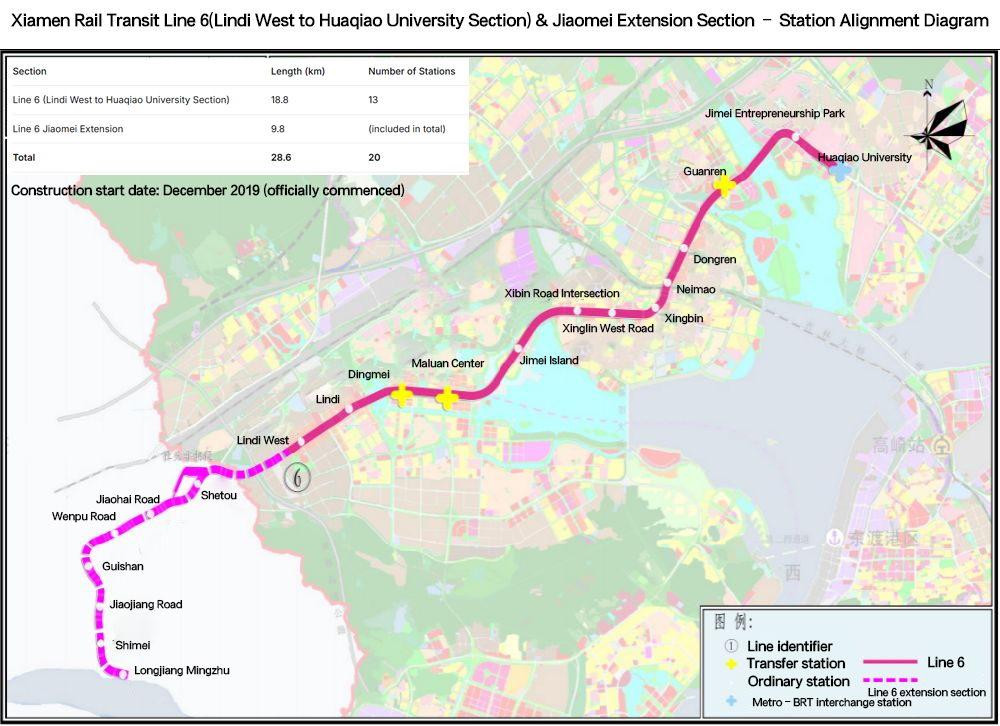
Xiamen Metro Line 6 is a key rail transit line connecting Xiamen Island with Haicang, Jimei, and other regions, playing a significant role in promoting the integrated development of the island and the mainland. As the passenger‑facing ticketing service window, the AFC system’s network equipment selection directly affects the stable operation of fare collection and the passenger travel experience.
The AFC system is deployed at three hierarchical levels: aggregation layer, station layer, and access layer. The requirements for communication equipment differ markedly across these levels – the aggregation layer demands high‑density ports and device‑level redundancy; the station layer requires rack‑mountable form factors and fast self‑healing; while the access layer, constrained by the limited space inside ticket gates and ticket vending machines, imposes stringent requirements on device size and wide‑temperature adaptability.
After multiple rounds of product research and solution comparisons, the project team ultimately selected the full range of MRD industrial Ethernet switches to build a clear‑hierarchy, stable, and reliable network communication solution for the AFC system of Xiamen Metro Line 6.
II. Project Challenges: Selection Difficulties and Countermeasures Under the Three‑Tier Architecture
| Layer | Deployment Location | Port Requirements | Key Challenges |
| Aggregation Layer | Control Center | ≥24 SFP Gigabit Optical Ports + ≥8 Gigabit Electrical Ports | High‑density optical ports, integrated chassis, dual‑system hot standby |
| Station Layer | Communication room at each station | ≥4 SFP Gigabit Optical Ports + ≥12 Gigabit Electrical Ports | 19‑inch rack‑mount, Layer 3 routing, ring network self‑healing <50ms |
| Access Layer | Inside gates / TVMs | ≥2 SFP Gigabit Optical Ports + ≥12 Gigabit Electrical Ports | DIN‑rail mounting, compact size, wide‑temperature environment |
Aggregation Layer: High‑Density Ports and Chassis‑Based Redundant Design
.png)
As the aggregation node for AFC data across the entire line, the control center demands extremely high port density and device reliability. The switch model TOM3000‑MHH4X24GX8GT‑L3B was adopted, featuring 4 service slots and 2 power supply slots. By equipping it with 2 optical interface cards and 1 electrical interface card, a single device provides a high‑density port combination of 24 Gigabit SFP optical ports and 12 Gigabit electrical ports. The chassis‑based design natively supports dual power supplies and dual main control redundancy, laying a solid hardware foundation for the control center.
Station Layer: Flexible Adaptation and Millisecond‑Level Self‑Healing
.png)
Deployed in the communication rooms at each station, the station layer has limited space but equally high reliability requirements. The TNM4000‑TB11LS51 is natively designed as a DIN‑rail device, but with rack‑mounting brackets it can be easily installed in standard 19‑inch racks, flexibly adapting to the station cabinet environment. The device supports the ERPS ring protocol, with measured self‑healing time of less than 50 ms, ensuring zero service interruption in the event of a single link failure – station ticketing operations remain unaffected.
Access Layer: Compact Form Factor and Wide‑Temperature Design
.png)
Access‑layer devices are installed inside ticket gates and automatic ticket vending machines, where space is extremely tight, and the devices are widely distributed in large numbers. The switch TCC4100‑BW40GLZ features DIN‑rail mounting with a compact width, precisely fitting into the reserved slots of the equipment. It supports both AC and DC universal power input, eliminating the need for additional adapters on site. Its operating temperature range covers –40°C to +85°C, readily coping with the high temperatures inside station halls during summer.
The entire solution – from aggregation to access – uniformly adopts MRD series products, complemented by the Changzheng Centauri software platform and the SkyNET network management system, achieving brand consistency, technical closure, and full‑lifecycle management. This provides a reliable guarantee for the long‑term stable operation of the AFC system on Xiamen Metro Line 6.
Summary
The successful delivery of the AFC system for Xiamen Metro Line 6 once again demonstrates that Shanghai MRDCom Co., Ltd., as a leading domestic industrial communication enterprise, possesses deep technical expertise and strong solution implementation capabilities in the vertical rail transit sector. The MRD series of industrial switches – with its complete product matrix ranging from modular chassis at the aggregation layer, DIN‑rail devices at the station layer, to compact models at the access layer – precisely matches the full‑hierarchy communication requirements of AFC systems. It also fully showcases the technical strength and reliable quality of domestic brands in critical rail transit infrastructure.
From Xiamen to cities across China, and from metro to high‑speed rail, MRD has consistently provided stable and reliable communication support for multiple rail transit lines. Looking ahead to the trends of intelligence and independent control in rail transit, Shanghai MRDCom Co., Ltd. will continue to deepen its industry engagement, contributing trustworthy Chinese communication power to more urban rail transit projects through its independently controllable technological solutions and benchmark‑class service capabilities.
MRD Showcases TSN Switches at 2026 CIIF
How Does a 6.8 km Yangtze River Crossing Tunnel Achieve Zero Communication Interruption?
MRD Industrial Switches in Xinjiang Kalpin 400MW CSP Project
MRD Patriot All‑Domestic Series with Changzheng Software Powers Nanhui Branch Line
Hotline: 86-21-58330762
Zip: 201203
Email: sales@mrdcom.net
Address: No.123 Curie Road, China (Shanghai) Pilot Free Trade Zone




Copyright 2026 MRD Co LTD . All Rights Reserved Shanghai ICP No.12035199


