In the Industry 4.0 era, industrial control systems are rapidly evolving from stand‑alone automation to multi‑machine collaboration and flexible manufacturing. Human‑Machine Interfaces (HMIs) demand microsecond‑level interactive response, while SCADA systems require millisecond‑level jitter and 99.999% reliability assurance. In harsh industrial environments – with electromagnetic interference, extreme temperatures, dust, and vibration – conventional commercial‑grade networks frequently fail, becoming a critical bottleneck restricting production line efficiency and safety. MRD™ deeply integrates industrial Ethernet redundant ring technologies and ETB protocols to build a full‑link data interconnection communication foundation – from field device level to management and dispatch layer. With core capabilities including millisecond‑level fault self‑healing, industrial‑grade high‑reliability design, Layer 3 routing, and intelligent O&M, MRD™ empowers manufacturers to confidently address the networking challenges of digital transformation.
Industrial Control System Communications: Core Challenges and Evolution Trends
Human - Machine Interface (HMI)
Deployed next to the production line or the console, it is a key window for the operator to interact with the equipment in real time. It is required that the screen be refreshed without clutter, with zero delay in operating instructions, and at the same time, it faces harsh environmental challenges such as space constraints, mechanical vibration, and dust and oil pollution. The supporting equipment needs to have high protection level and wide temperature working ability.Monitoring Control and Data Acquisition (SCADA)
Responsible for collecting and uploading data from scattered RTUs and PLCs to the central control room. Extremely sensitive to data integrity and timeliness, strong ring network redundancy is required to prevent a single point of failure from causing the entire network to be paralyzed, and millisecond-level failure self-healing is required to ensure monitoring continuity.Core insights
Industrial control systems are evolving from stand-alone automation to multi-machine collaboration. Together, HMI and SCADA form the core requirements of industrial interconnection, and put forward stringent industrial-grade standards for deterministic latency and high availability of communication networks. MRD™ Meridian ® solutions are designed to address these challenges.
Four Core Highlights
Network self-healing when inter-for ratio (milliseconds)
Using the international standard redundant ring network technology achieves 50 millisecond fault self-healing. When any link or node fails, the ring network protection mechanism is automatically triggered, and the link switching and route reconvergence are completed in 50 milliseconds. Self-healing speed far exceeds the traditional STP protocol for 30 seconds, supporting ERPs, RSTP, etc. A variety of ring network protection mechanisms can flexibly adapt to different network topology scenarios to meet the demanding requirements of industrial control for real-world.
in the process of failover, the HMI man-machine interface operation instructions and SCADA data acquisition do not lose packets or get stuck. Control business continuity to ensure that equipment malfunction or data loss due to network interruption is avoided. A single point of failure does not affect the overall network communication, building an industrial network architecture that is truly high-can be used. the performance is already in Metro Line 10, etc. Rigorous scenario verification, for industrial control provides telecommunication-grade reliability assurance.
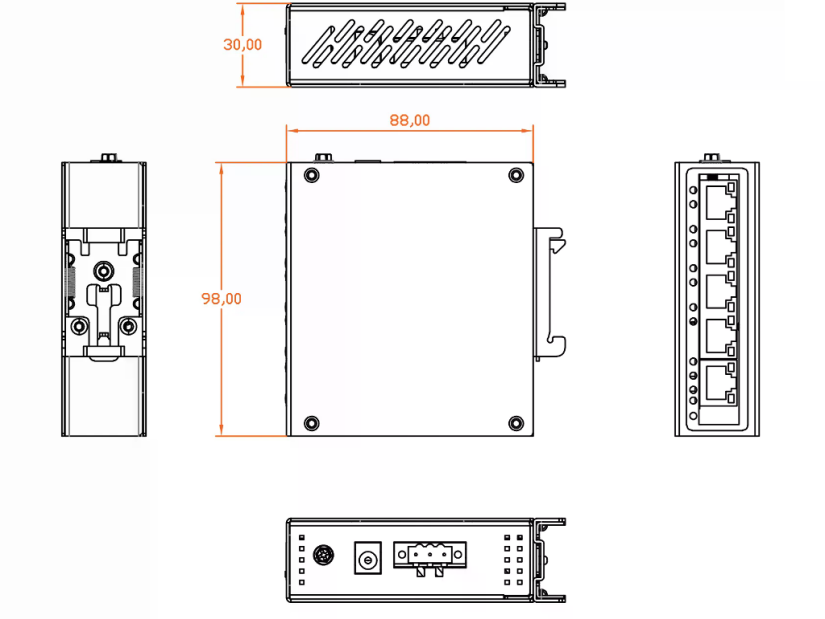
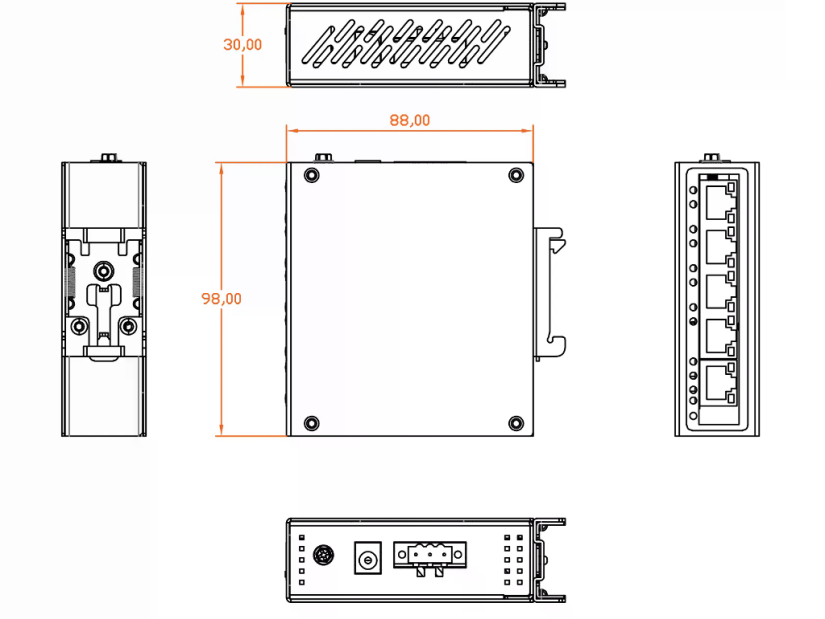
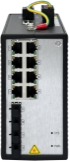
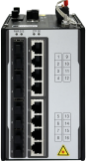
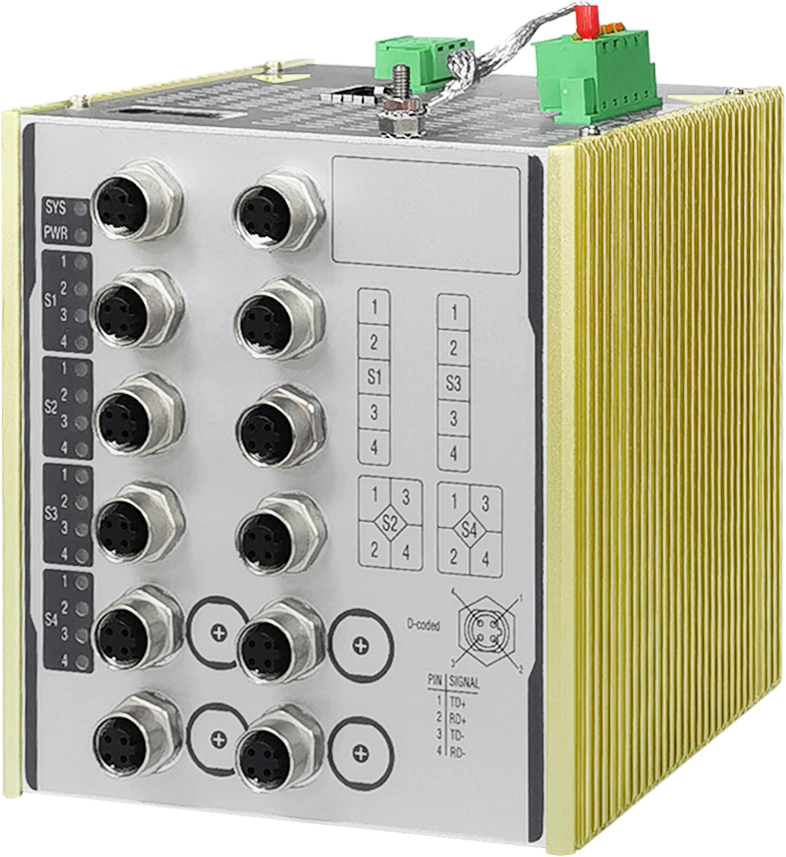
Industrial-grade fanless switch part structure
passes six major industrial designs to ensure uninterrupted operation in strict industrial sites achieves 7 × 24 small when:
Extreme environmental adaptation: The whole system supports a wide-temperature working range of -40 °C to +85 °C, adapting to the temperature challenge of all scenarios from cold storage to boiler room. IP30/IP40/IP67 Multiple, etc. Grade protectioncan selection, Corrosion Protection Aluminum alloy shell resists dust, oil and moisture erosion.
fanless high can: fanless natural Thermal design completely eliminates the risk of fan mechanical failure. MTBFMTBF is more than 870,000 small when (calculated based on SR-332can reliability algorithm) (about 99.5 years). Suitable for high dust, strong vibration environment, no need to worry about fan dust or bearing wear and tear leading to equipment failure.
defense-grade process: Long-life tantalum capacitors, crystal oscillators, etc. Key devices to further improve long-term operation reliability; EniG platingPCB has a longer plugging life (> 1000 times) and antioxidant capability than tin plating. Conductive oxide shell treatment with better Thermal and grounding continuity. passes EMC Level 4 industrial level 4 electromagnetic compatibility certification, in inverter, high power motor side stable operation.
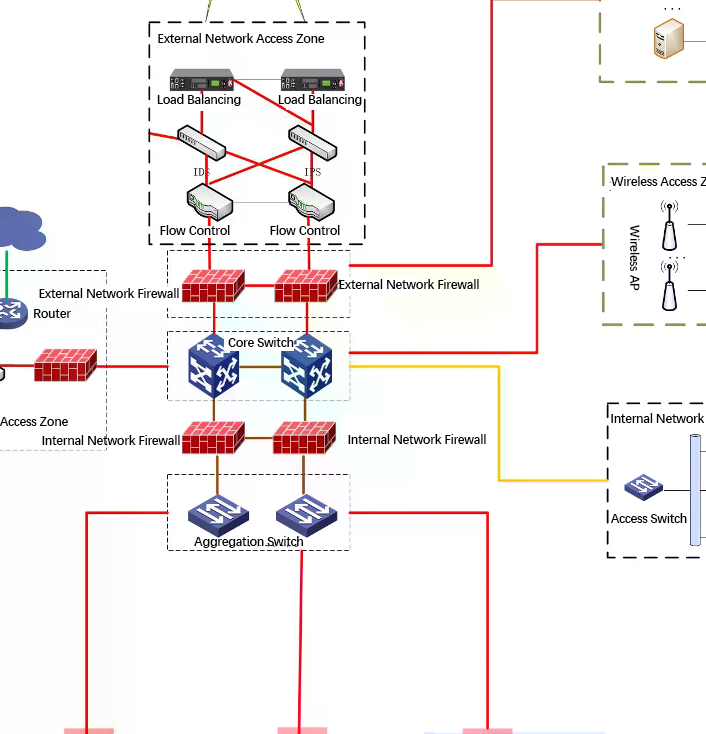
.png) Figure: Schematic diagram of industrial communication network architecture (workshop-level subnetting and cross-network segment communication logic)
Figure: Schematic diagram of industrial communication network architecture (workshop-level subnetting and cross-network segment communication logic)
Aggregation layer and key node switches have Layer-3 routing (static/OSPF) and NAT network address translation capabilities. Support static routing and OSPF dynamic routing protocol, achieves cross-subnet interconnection and optimal path selection. Support VRRP virtual routing redundant protocol to ensure that the gateway can be used at a high level to avoid a single point of failure leading to a network-wide outage.
The NAT function supports network address translation, solves the problem of IP address conflicts between different workshop devices, and achieves multi-segment convergence communication. passes NAT hidden part network structure, enhances industrial network security, and prevents the department from directly accessing control devices.
Industrial scenario value: Layer-3 routing and NAT function Industrial network from Layer-2 switching upgrade for Layer-3 interconnection, to meet the complex network management needs of large enterprises with multiple workshops and production lines.
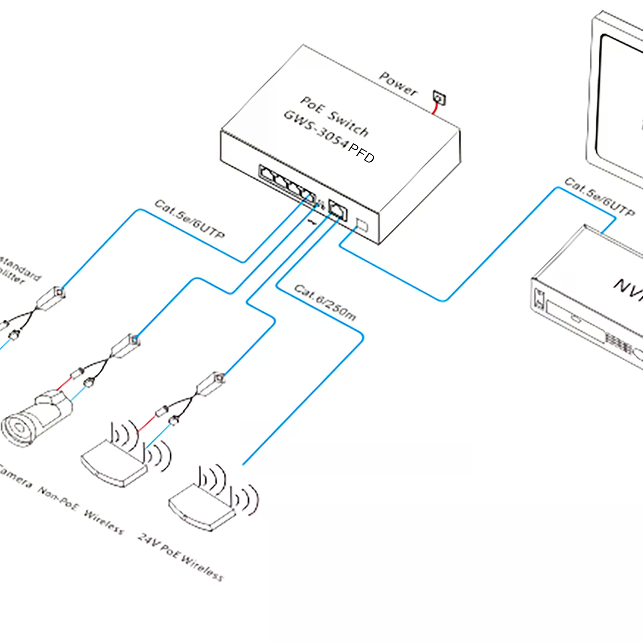
PoE powered and industrial switch deployment
provides a variety of interface formats:
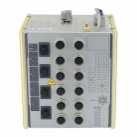
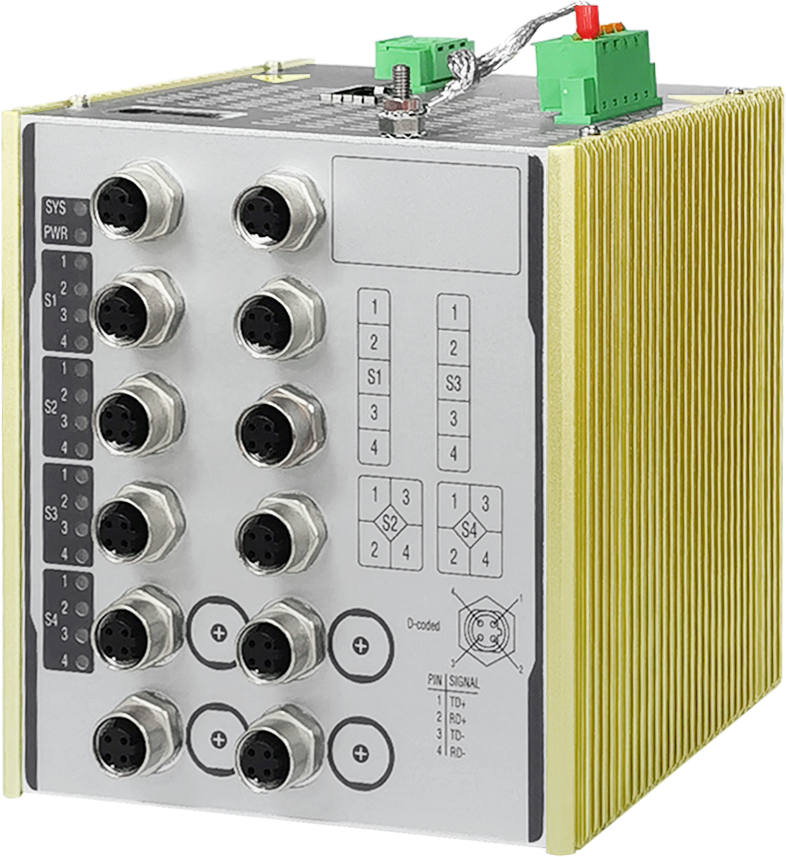
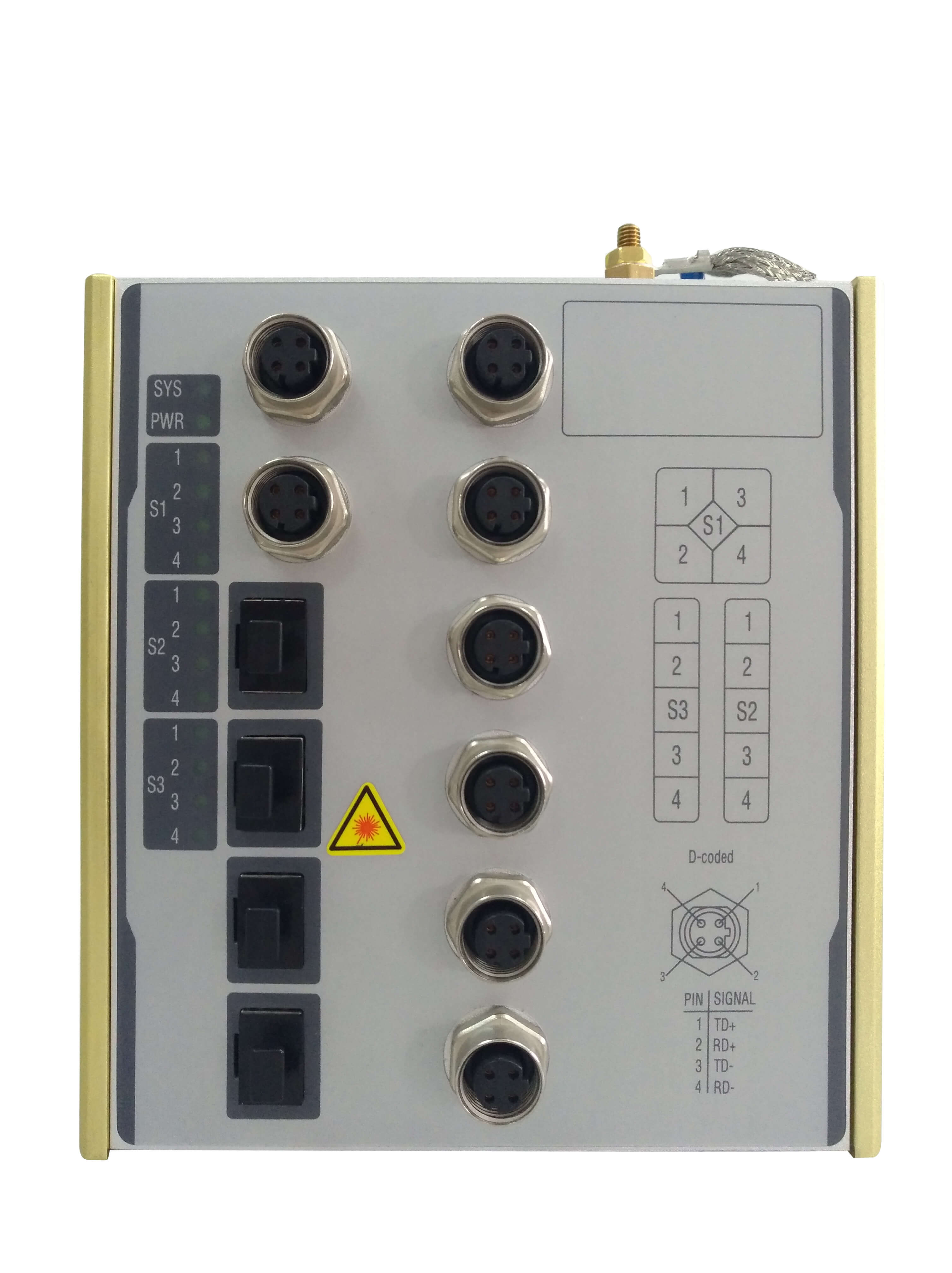
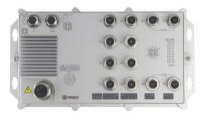
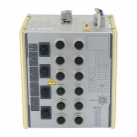
M12 aviation plug: anti-vibration and anti-impact, specially for on-board, rail transit, etc. Strong vibration scene design
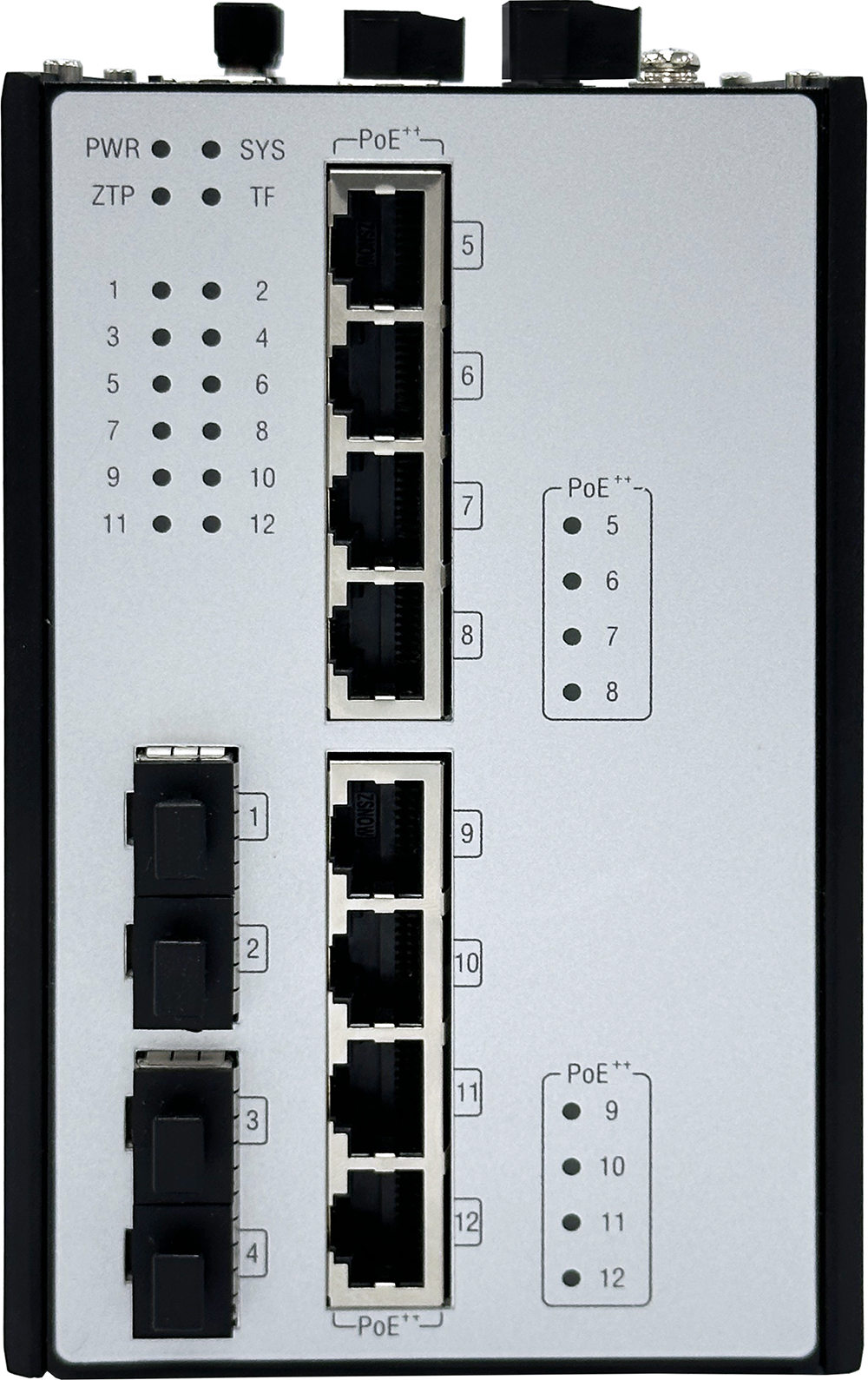
RJ45standard copper port: Compatible with regular Ethernet devices
SC/ST/SFPfiber port: supports fiber optic long-distance transmission
PoE/PoE + power supply: support 802.3af/atstandard, single port 30W power supply, can directly for IP camera, wireless AP power supply, simplify field cabling reduction deployment to this
Equipped with Centauri network management software, achieves network-wide device topology automatic discovery and topology visualization, VLAN division, QoS policy set configuration, and supports SNMP v3 security network management protocol. Supports batch configuration, remote firmware upgrade, port mirroring and traffic statistics, and shortens the fault location time from 2 to 5 minutes.
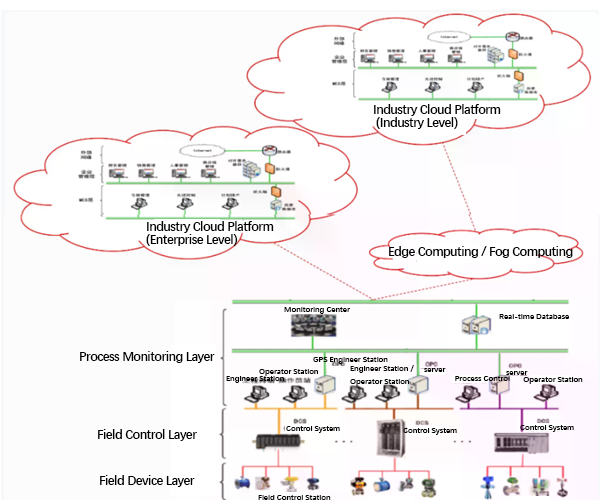 industrial automationLayer-3 network architecture diagram
Uses a typical industrial automationLayer-3 architecture:
Deploy SCADA server and HMI monitoring large screen, responsible for production planning, order management, quality traceability, etc. Enterprise-level application data interaction. achieves deep convergence of IT and OT to support big data analytics and intelligent decision-making.
Core layer: TNM4000 series rackmountLayer-3industrial switch, supports OSPF/BGP/VRRP, provides 24 Gigabitcopper port +4 Combo port +2 SFP port, -40 ℃ ~ +85 ℃ wide-temperature, IP40protection.
Aggregation layer: MTX140 series Din-Rail switches are used to form a redundant ring network, which supports the ERPs protocol achieves 50 millisecond failure self-healing and dual Powerredundant inputs.
passes MTX100/MTX110/MTM12 series switches access PLC controllers, HMI touch screens, IP cameras, inverters, etc. Field equipment. Supports PoE power supply to simplify wiring, M12 interface to resist vibration and shock, IP67protection to adapt to harsh environments.
Application case: Vehicle-mounted PIS system for Metro Line 10
Haiti Metro Line 10 is the first fully automated driverless rail transit line in the sea, with a total length of 36 kilometers and 31 stations. The on-board PIS system is responsible for actual when-to-station releases, multimedia information, emergency evacuation instructions, etc. Core functions. The traditional "jumping" network cannot support flexible train grouping, the manual configuration IP is inefficient and error-prone, and the equipment is decentralized. The average failure location consumption is more than 2 times.
.png) Schematic diagram of line 10 of Haiti Metro
Schematic diagram of line 10 of Haiti Metro
Solution Deployment
passes four-step deployment strategy achieves in-vehicle network high can rely on transformation:
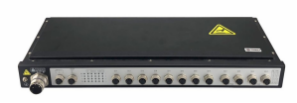
Each car is equipped with an MTM12 series vehicle-mounted industrial switch, which adopts M12 aviation plug and high IP67Protection rating. The anti-vibration and anti-impact design is suitable for the vehicle-mounted environment.
Dual redundantPower input, supports -40 ℃ ~ +75 ℃ wide-temperature operation.
The all-vehicle switch passes over the network cable to form a redundant ring network, using the fast ring network protocol achieves a single point of failure 50 milliseconds self-healing
Guarantee PIS system video streaming, audio streaming in high-speed operation and strong EMI without clutter and packet loss
The front and rear industrial switch is equipped with Layer-3 routing and NAT function to support subnet isolation and cross-car communication.
Resolve equipment IP conflicts, achieves equipment interconnection and safety isolation of different carriages
Supports IEC61375-2-5 ETB train backbone standard and TTDP topology discovery protocol
achieves train dynamic grouping and automatic initialization, car coupling and unhanging does not affect normal operation, equipment replacement plug and play
Stable can rely on transmission: video streaming, audio streaming in high-speed operation and strong EMI environment without clutter, no packet loss, communication quality up to telecommunication level standard. Network can usage reaches 99.999%, and unplanned downtime during the year drops from an average of 48 hours per year to less than 5 minutes.
Dynamic and flexible grouping: When a train grouping change does not require manual reassignment, the TTDP protocol automatically completes topology identification and IP mapping. Completely solve the problem of traditional jumping network grouping, support flexible coupling and unhooking of carriages, and improve vehicle scheduling flexibility and operational efficiency.
Operation and maintenance is greatly simplified: the device is replaced by plug and play, and there is no need to manually reassign the IP address. The Centauri network management software achieves network-wide device topology can be visualized. When the fault location is reduced from 2 to 5 minutes, the operation and maintenance response efficiency is increased by 90%, and the personnel composition is reduced by 60%.
Business continuity guarantee: a single point of equipment failure does not affect the entire network communication, redundant ring network 50 milliseconds self-healing to ensure that the PIS system 7 × 24 small when uninterrupted service. Successfully ensure the safe and stable operation of the unmanned line of the Haitian Metro Line 10.
Figure: PSIM platform network bearer layer architecture (Industrial Ethernet ring network unified bearer IDs/CCTV/FAS/ACS, etc. Subsystem Data Flow)
For the comprehensive security needs of industrial sites, MRD Industrial Ethernet can be used as a unified network bearer layer for psim (Physical Security Information Management) platform, intrusion detection (IDS), video surveillance (CCTV), fire alarm (FAS), access control (ACS) and environmental monitoring, etc. Multi-subsystem data unified access, interconnection, achieves "perception - research - response" active security closed loop, from passive monitoring upgrade for active security.
Relying on the MRD high can network base, the PSIM platform decentralizes the security subsystem for collaborative linkage, so that the industrial site security response is retroactively upgraded from incident to incident warning and incident disposal, and the safety operation level of critical infrastructure is comprehensively improved.
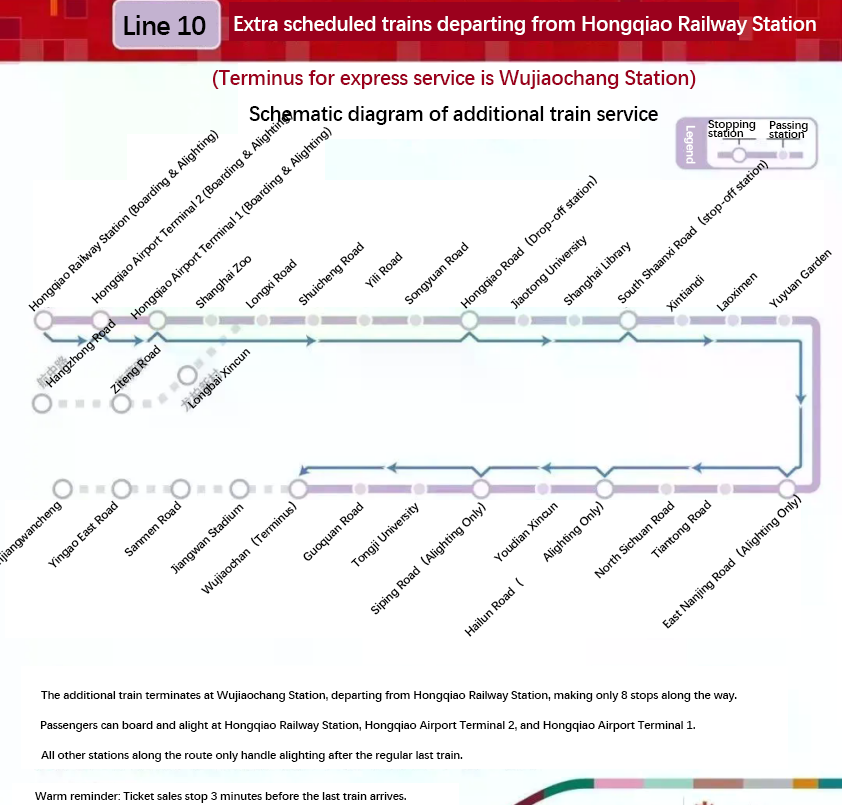
Shanghai's first fully automated driverless rail transit line, the on-board PIS undertakes core functions such as inbound release, multimedia information, and emergency evacuation instructions.
The carriage is equipped with an on-board industrial switch and forms a redundant ring network. Three-layer routing and NAT are enabled on the front/rear of the car, and ETB/TTDP dynamic grouping is supported.
The network availability reaches 99.999%, and the fault location time is shortened from 2 hours to 5 minutes, ensuring the safe and stable operation of unmanned lines.
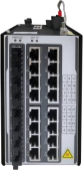
Supports 24 Ethernet ports including 8×2.5G SFP; any two ports can form a self-healing ring with multiple independent rings; QoS (IEEE 802.1p/1Q and ToS/DiffServ); SNMPv1/v2c/v3
More| Products | Critical capability | Sort | Descriptions |
|---|---|---|---|
| TCC4100 series railway train on-board industrial switch | Supports Ethernet ring network function based on MRD-Ring ® technology, nodes self-healing time under 5 milliseconds, ring network self-healing time under 50 milliseconds (typical value) Supports IEC-based... | eth-poe | See product details |
| TCC4100 Series Railway Train Car IP54IP67 Switch | Supports up to 8 PoE ports Supports Ethernet ring function based on MRD-Ring ® technology, supports multiple self-healing rings, nodes self-healing time under 5 milliseconds, ring network self-healing when... | eth-poe | See product details |
| TCC4100 series 24-port high-end Din-RailLayer-3industrial switch | Supports 24 Ethernet ports, including 8 2.5g SFP fiber ports Any two ports can be used to form a self-healing ring network, and supports multiple independent self-healing rings... | eth-l3-mgt | See product details |
| TCC4100 Firm Interface Din-Rail Switch - Gigabit | Backplane bandwidth up to 68Gbps Supports Ethernet ring network function based on MRD-Ring ® technology, supports multiple self-healing rings, nodes self-healing time under 5 milliseconds, ring network self-healing... | eth-l3-mgt | See product details |
Every solution is built on relentless pursuit of product fundamentals. We disclose the following design details for the most demanding engineering review:

MTBF (Mean Time Between Failures)
Device-level stress prediction based on the SR-332 algorithm; system MTBF exceeds one million hours.
Service Life
Not only datasheet ratings—measured estimates based on electrolytic capacitor capacitance fade at minimum operating parameters @ operating temperature.
Designed to stringent rail-transit, power, and transportation standards using high-MTBF algorithms and lifetime assessment.

A complete portfolio from field access and line aggregation to core switching for industrial control of different scales.

From ENIG and conductive oxidation PCB processes to power isolation and software memory self-check, stability and lifetime are ensured from the source.

Proven on demanding projects such as Shanghai Metro Line 10 driverless operation under strong EMI, high-speed running, and flexible consists.
Hotline: 86-21-58330762
Zip: 201203
Email: sales@mrdcom.net
Address: No.123 Curie Road, China (Shanghai) Pilot Free Trade Zone




Copyright 2026 MRD Co LTD . All Rights Reserved Shanghai ICP No.12035199

International-standard redundant rings with ~50 ms fault self-healing to protect HMI and SCADA continuity.
When any link or node fails, the ring network protection mechanism is automatically triggered, and the link switching and route reconvergence are completed within 50 milliseconds, far exceeding the recovery time of about 30 seconds of traditional STP; various ring network protection mechanisms such as ERPs and RSTP are supported.
During the failover process, the HMI operation instructions and SCADA data acquisition do not lose packets or get stuck, and a single point of failure does not affect the entire network communication.
The whole system supports -40 ℃ to +85 ℃ wide temperature, IP30/IP40/IP67 multi-grade protection is optional; no fan natural cooling, MTBF more than 870,000 hours (based on SR-332).
Through EMC Level 4 industrial level 4 electromagnetic compatibility certification, immersion gold process PCB and long-life key devices ensure long-term operation.
Aggregation with Layer-3 routing (static/OSPF) and NAT plus CENTAURI NMS cuts fault localization from 2 hours to 5 minutes.
Aggregation layer and key node switches have Layer 3 routing (static/OSPF) and NAT network address translation capabilities, supporting VRRP virtual routing redundancy protocol to ensure high availability of gateways.
The NAT function solves the problem of IP address conflicts between different workshop devices, realizes multi-segment converged communication, hides the internal network structure through NAT, and enhances the security of industrial networks.
Provide a variety of interfaces such as M12 aviation plug, RJ45 electrical port, SFP optical port, etc., support PoE/PoE + power supply, single port 30W power supply, simplify field wiring.
Equipped with Centauri network management software, automatic topology discovery and visualization of network-wide devices, VLAN division, and centralized configuration of QoS policies are achieved, and the fault location time is shortened from 2 hours to 5 minutes.
The SCADA server and HMI monitoring large screen are deployed at the dispatch management center layer; the core layer and the aggregation layer use the TNM4000/MTX140 series to form a redundant ring network; the field device access layer accesses PLC, HMI, IP camera and other terminals through the MTX100/MTX110/MTM12 series.