
Published: 2025-12-19
During the construction of Suzhou Rail Transit Line 7, MRD has deeply empowered the project with its full‑stack industrial communication solutions. From core backbone switching to station‑level service bearing, we have comprehensively participated in the deployment of multiple critical systems, including Integrated Supervisory Control (ISCS), BAS, communication, and power supply. With our self‑developed high‑reliability industrial switches and unified network management platform, we have woven a “independently controllable and perpetually operating” intelligent communication network for this north‑south trunk line that links the High‑speed Railway New Town and Taihu New City. MRD has thus become a key technical supporter for Suzhou Rail Transit’s strategic goal of achieving a “nine‑line integrated operation” pattern.
I. The Final Phase III Line: Shouldering Suzhou Rail Transit's New Strategic Mission
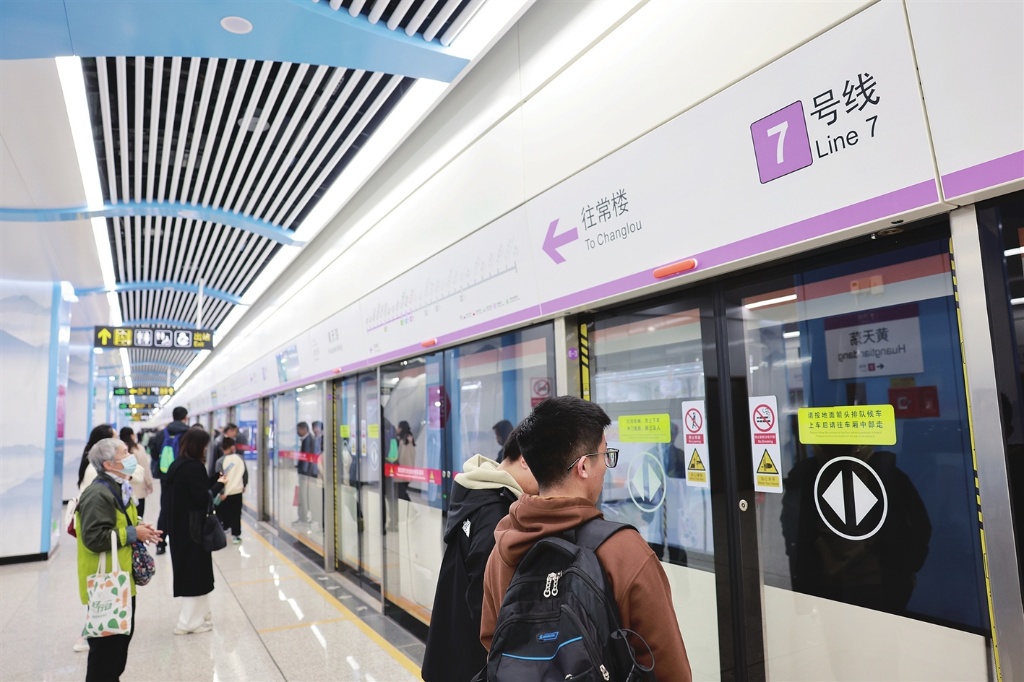
Suzhou Metro Line 7 spans 40.4 km in total length. As the final line of Suzhou Rail Transit’s Phase III construction plan, it not only serves as a critical link connecting the High‑speed Railway New Town, the western core area of Lake Suzhou, and Taihu New City, but also stands as a vital transportation carrier for implementing the “Suzhou‑Shanghai integration” strategy and promoting the integrated development of the Yangtze River Delta.
Faced with multiple challenges – including large passenger flow distribution at Suzhou North Railway Station, coordinated management of multiple systems, and intelligent operation and maintenance across the entire line – Line 7 imposes extremely high demands on its underlying industrial communication network: millisecond‑level reliable data exchange among all systems, the ability to operate stably over extended periods in complex operational environments, and sufficient technical headroom for future smart rail transit expansions.
II. MRD Full‑Stack Communication Solution: Building the "Neural Center"of Line 7
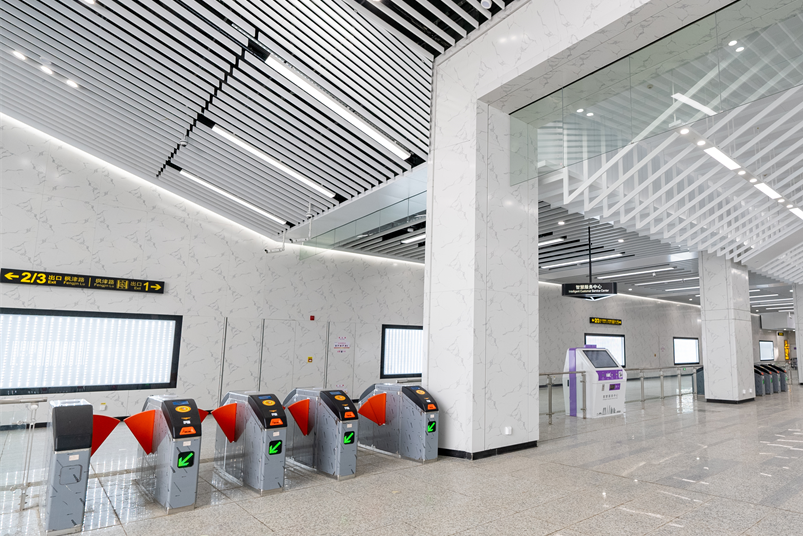
As a leading enterprise in the industrial communication sector, MRD has been deeply involved in the construction of Line 7’s communication system, providing a full range of switch products covering core backbone, station services, and onboard scenarios. With a core focus on “domestic production, high performance, and high reliability,” we have built an independently controllable communication infrastructure for the line’s operations:
1. Core Backbone Network: Enabling Intelligent Coordination Across the Entire Line
MRD core backbone switches are deployed at the control center and key hub nodes, adopting a fully redundant architecture and carrier‑class reliability design. They carry real‑time data aggregation and cross‑discipline coordination for systems such as ISCS and BAS (environment and equipment monitoring), providing a stable, high‑speed data backbone for the line’s intelligent operations.
2. Station Service Network: Precise Synergy for In‑Station Systems
In station communication, access control, power supply monitoring, and other systems, MRD industrial switches leverage industrial‑grade protection and deterministic forwarding performance to ensure precise, real‑time, and secure transmission of various service data under complex electromagnetic environments and temperature/humidity fluctuations. This strongly supports efficient station operations and an enhanced passenger service experience.
3. Unified Network Management Across the Line: Achieving Visualized and Controllable O&M
Leveraging MRD’s centralized network management platform, Line 7 achieves unified monitoring, configuration, and fault early‑warning for all communication devices along the line, greatly improving O&M response efficiency and system availability, and providing intelligent management assurance for the line’s long‑term stable operation.
III. MRD Related Products
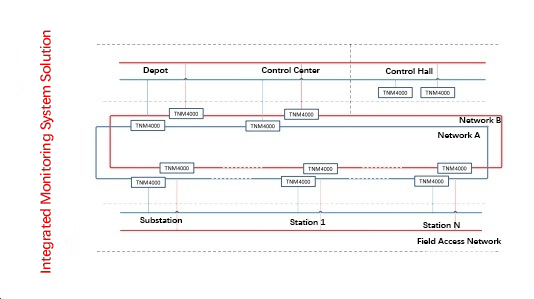
·Terminal devices and servers connect to two independent ring networks via dual network ports.
·Each backbone ring network (Network A or Network B) must support redundancy switchover within 50 ms.
·Both dual backbone ring networks are built with industrial‑grade switches featuring high MTBF and long lifetime.
·Subsystems of the ISCS each connect to the two backbone ring networks via front‑end DIN‑rail industrial switches.
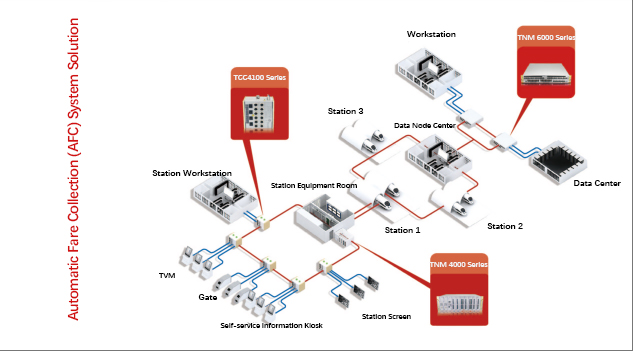
·AFC network equipment requires fanless design, high protection rating, reliability, and redundant power mechanisms to ensure ticketing services operate normally.
·Each access network must support redundancy switchover within 50 ms.
·On‑site access ring networks are built with industrial‑grade switches featuring high MTBF and long lifetime.
·The AFC system connects to the SDH‑based transmission node network via aggregation nodes at each station.
Against the backdrop of advancing localization of key technologies and securing supply chain independence, MRD – as a benchmark brand in the industry – equips its entire product line with fully domestic chips and a proprietary communication operating system, achieving comprehensive independent control from hardware to software. This has built a secure, trustworthy, and sustainably evolvable communication infrastructure for Suzhou Rail Transit.
As a staunch force in the domestic substitution of industrial communication equipment, MRD will continue to provide reliable and stable communication support for Suzhou through its independent technologies, full‑stack products, and in‑depth services, jointly writing a new chapter in smart urban mobility.
MRD Showcases TSN Switches at 2026 CIIF
How Does a 6.8 km Yangtze River Crossing Tunnel Achieve Zero Communication Interruption?
MRD Industrial Switches in Xinjiang Kalpin 400MW CSP Project
MRD Patriot All‑Domestic Series with Changzheng Software Powers Nanhui Branch Line
Hotline: 86-21-58330762
Zip: 201203
Email: sales@mrdcom.net
Address: No.123 Curie Road, China (Shanghai) Pilot Free Trade Zone




Copyright 2026 MRD Co LTD . All Rights Reserved Shanghai ICP No.12035199


