
Supports multiple Layer-3 routing and industrial ring protocols
Any two ports can form a self-healing ring; multiple independent rings supported
Supports QoS (IEEE 802.1P/1Q and TOS/DiffServ)
Supports CLI, Telnet, Web management and SNMPv1/v2c/v3 NMS
SRS2000 Series rackmount WEB-managed PoE industrial switch uses 48~54VDC redundant dual power, rackmount, up to 30W per PoE port. Rugged aluminum housing, IP40, high-level EMI/EMC, strict burn-in—meeting industry stability and durability requirements.
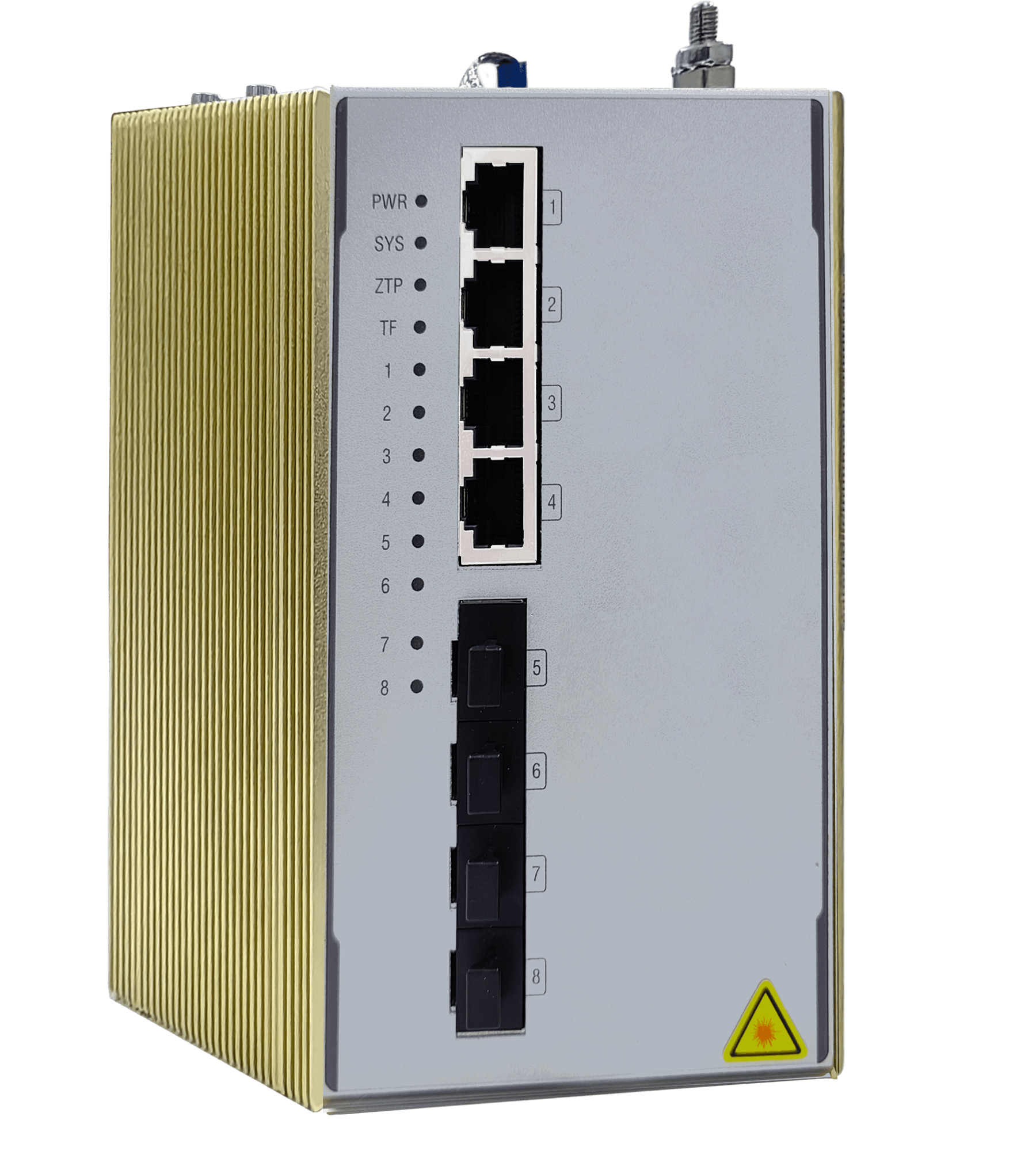
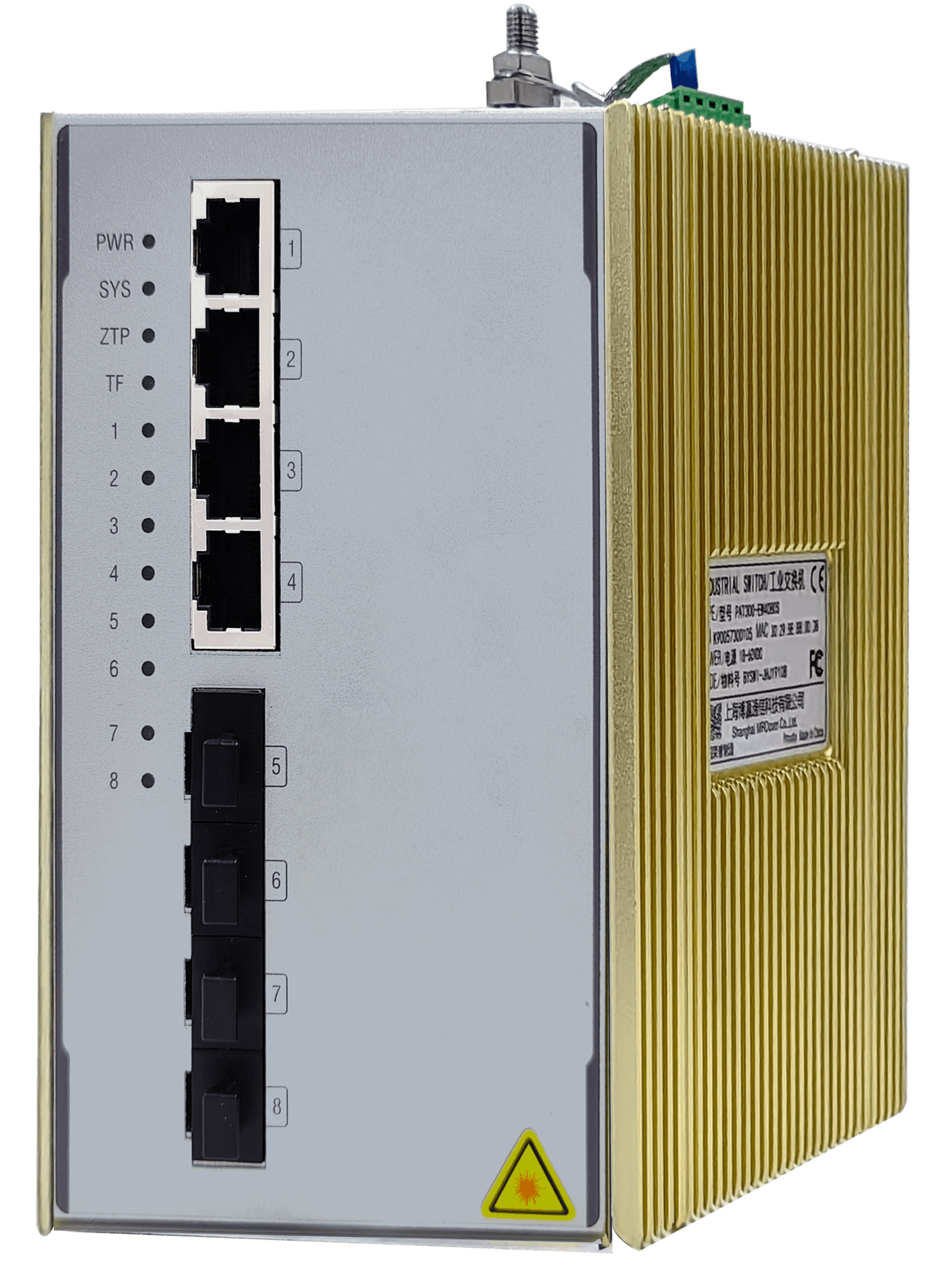
PAT300 Series indigenous controllable Layer-3 DIN-rail switch supports 8×GE copper + 4×FE/GE SFP; 4×GE copper + 4×FE/GE SFP; or 4×GE copper + 4×FE/GE SFP + 4 serial ports.
PAT300 Series indigenous controllable Layer-3 DIN-rail switch supports IGMP Snooping, IEEE 802.1Q VLAN, port-based VLAN, QoS and port mirroring. Ethernet redundancy via RSTP/STP/MSTP improves reliability and backbone availability. Rugged aluminum alloy housing for industrial environments.
The cable is connected, but the port will not come UP / the link is down. What should I check?
+What are the PoE power specifications?
+Which ring protocols are supported, and what is the self-healing time?
+How should I choose between Layer-2 and Layer-3 industrial switches?
+Can non-OEM SFP optical modules work normally?
+How do I restore factory settings if I forget the device login password?
+What are the power supply requirements for industrial switches?
+What are the operating temperature range and protection rating of industrial switches?
+Core CPU, switch chip and PHY use domestic chips with domestic-IP HarmonyOS
Supports multiple Layer-3 routing and industrial ring protocols
Any two ports can form a self-healing ring; multiple independent rings supported
Provides packet-loss protection with fast recovery from network faults
Supports IGMP Snooping and GMRP
Supports port-based unicast MAC binding
Supports multiple multicast protocols with strong security
Supports broadcast storm control (enabled by default)
Supports QoS (IEEE 802.1P/1Q and TOS/DiffServ)
Supports CLI, Telnet, Web management and SNMPv1/v2c/v3 NMS
Supports RMON
Supports bandwidth management
Supports port mirroring
IP40 protection rating
Redundant dual power input
Fanless, operating temperature -40°C to +85°C
IEEE 802.3 CSMA/CD method and physical Layer specifications
IEEE 802.1p Priority Queuing
IEEE 802.1q VLAN tagging
IEEE 802.1d Spanning Tree Algorithm
IEEE 802.1w Rapid Spanning Tree
IEEE 802.1s Multiple Spanning Tree
IEEE 802.3ac VLAN Tagging
IEEE 802.1x Authentication
IEEE 802.3ad Link Aggregation
IEEE 802.3x Flow Control
IEEE 802.3 Ethernet
IEEE 802.3u Fast Ethernet
IEEE 802.3z Gigabit Ethernet
IEEE 802 Networks
RFC 768 UDP
RFC 791 IP
RFC 792 ICMP
RFC 793 TCP
RFC 826 ARP
RFC 854 Telnet Client & Server
RFC 862 Echo Protocol
RFC 863 Discard Protocol
RFC 1027 Using ARP to Implement Transparent Subnet Gateways
RFC 1058 RIP
RFC 1059, 1119 NTPv1/2
RFC 1112 IGMP IP
RFC 1191 Path MTU Discovery
RFC 1256 ICMP Router Discovery Protocol ICMP
RFC 1388 RIP Version 2 Carrying Additional Information
RFC 1519 CIDR (Classless Inter-domain Routing)
RFC 1542 Bootstrap Extensions & DHCP DHCP
RFC 1587 OSPF NSSA
RFC 1765 OSPF Database Overflow OSPF
RFC 1812 Requirements for IP Version 4 Routers IPv4
RFC 1851 The ESP Triple DES Transform ESP
RFC 1866 HTML HTML
RFC 1994 PPP Challenge Handshake Authentication Protocol (CHAP)
RFC 2068 HTTP
RFC 213 DHCP Server DHCP
RFC 2138 RADIUS
RFC 2139 RADIUS Accounting
RFC 2236 IGMPv2
RFC 2328 OSPFv2
RFC 2338 VRRP
RFC 2370 The OSPF Opaque LSA Option OSPF
RFC 2474 DiffServ Precedence
RFC 2475 DifffServ Core and Edge Router Functions
RFC 2597 DiffServ Assured Forwarding
RFC 2598 DiffServ Expedited Forwarding
RFC 2644 Directed Broadcasts
RFC 2865 Remote Authentication Dial In User Service (RADIUS)
RFC 3046 DHCP Relay Agent Information Option DHCP
RFC 3222 Forwarding Information Base (FIB)
GMRP GARP
GVRP GARP
SSH2 Secure Shell 2
IGMP snooping IGMP
SNMPv3
| Backplane bandwidth | 224Gbps |
| processor | 1.0G dual core |
| Memory | 16G bits |
| Switching Technology | store-and-forward |
| MAC Address Table | 32K |
| Flash | 32M bits |
| packet buffer | 24M bits |
| switching rate | 148,800 pps/FE port; 1,488,000 pps/GE port |
| Management Methods | Browser, serial, STD-17 MIB-II, STD-58 SMIv2, STD-62 SNMPv3, SNMPv2c, SNMPv1, RFC3636 MAU, RFC2925 Ping MIB |
| Diagnostics | Indicators, logs, relay, port mirroring, TRAP |
| Redundancy | RSTP, STP, MSTP, link aggregation |
| time synchronization | NTP |
| other | 4K VLANs, IPv4/IPv6 multicast, storm control, Jumbo Frame |
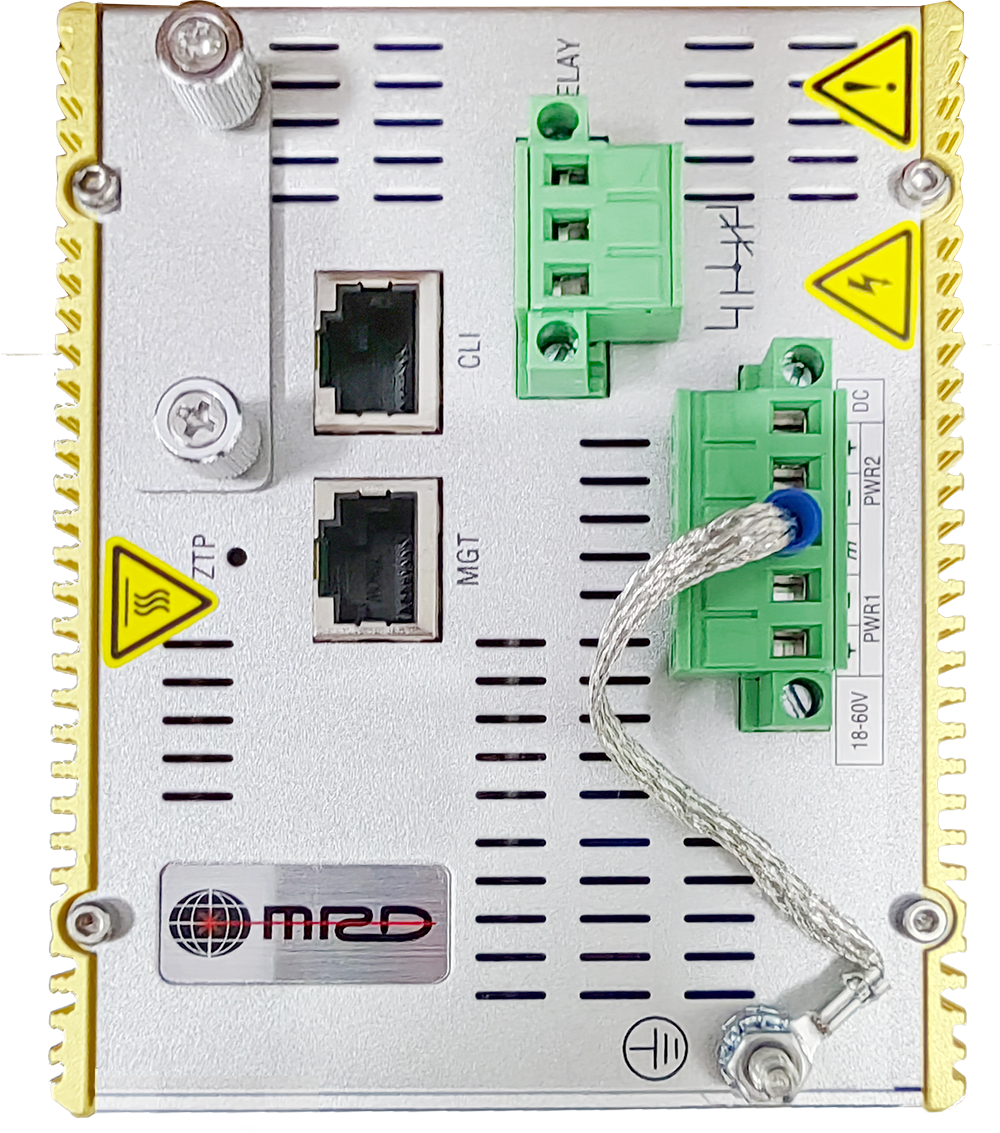
| connection | 1 removable 5-PIN terminal |
| Input voltage | 18~60 VDC, dual input |
| overload current protection | support |
| reverse polarity protection | support |
| Power consumption | ≤20W |
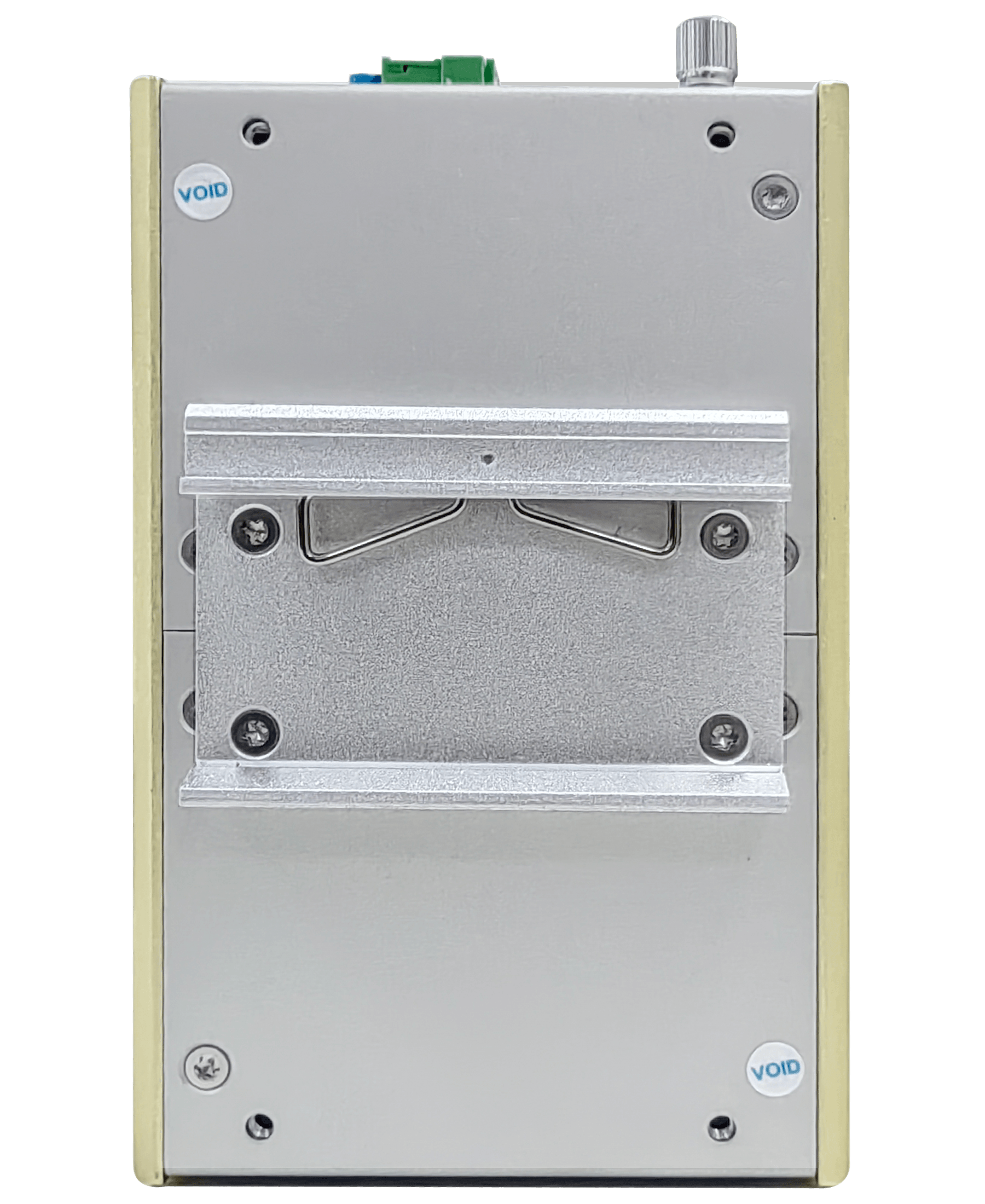
| Mounting method | Din-Rail mounting |
| shell | die-cast aluminum alloy housing |
| protection rating | IP40 |
| Dimensions (W×H×D) | 88mm x 140mm x 110mm (±0.3) |
| Weight | ≤ 1.2KG |
| Storage Temperature | ‐40°C~ 85°C |
| Operating temperature | ‐40°C~ 85°C |
| humidity | 5% ~ 95% (non-condensing) |
| vibration | IEC 60068-2-6 |
| impact | IEC 60068-2-27 |
| free fall | IEC 60068-2-31 |
| circuit board | Compliant with IPC standards |
| EMI radiation | FCC 47 CFR Part 15 Class A EN55032 Class A EN55035 Class A |
| EMC | IEC(EN)61000-4-2, Level 4 IEC(EN)61000-4-4, Level 4 IEC(EN)61000-4-5, Level 4 IEC(EN)61000-4-6, Level 3 IEC(EN)61000-4-9, Level 5 |
| Product Safety | CE.CB.IEC.IECEE IEC/EN62368-1 FCC Part 15 Subpart B C lass A |
| hazardous area | UL/cUL1604 Class 1 Div 2 (pending) |
| transportation industry | JT/T817-2011; NEMA-TS2 (pending) |
| rail industry | EN50121-4 |
| power industry | IEC61850-3 IEEE1613(C37.90.x) |
| industrial control industry | UL/cUL61010 (pending) |
| shipbuilding industry | GL (pending) |

Product Specification
Patriot PAT300-HOSWFLY4
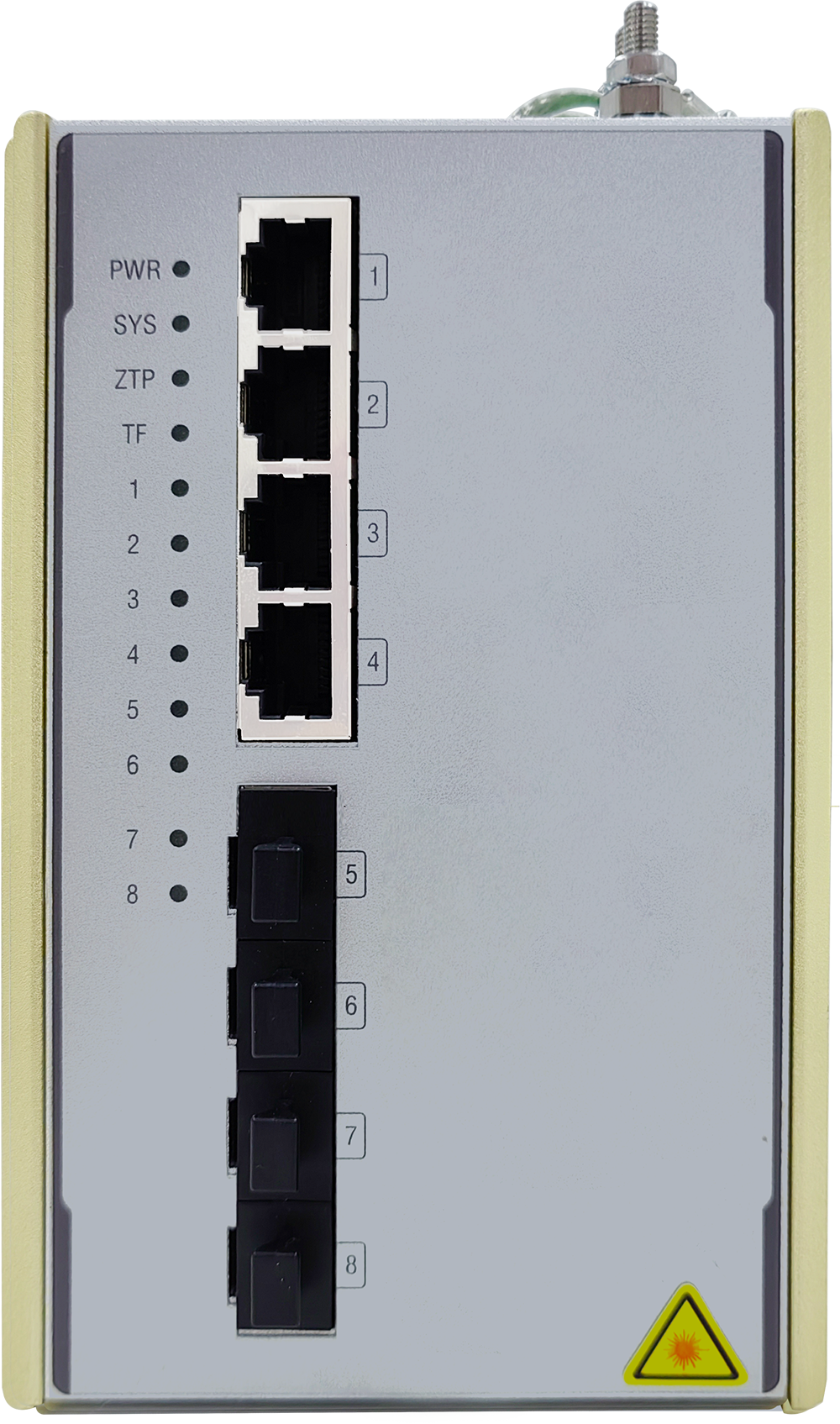
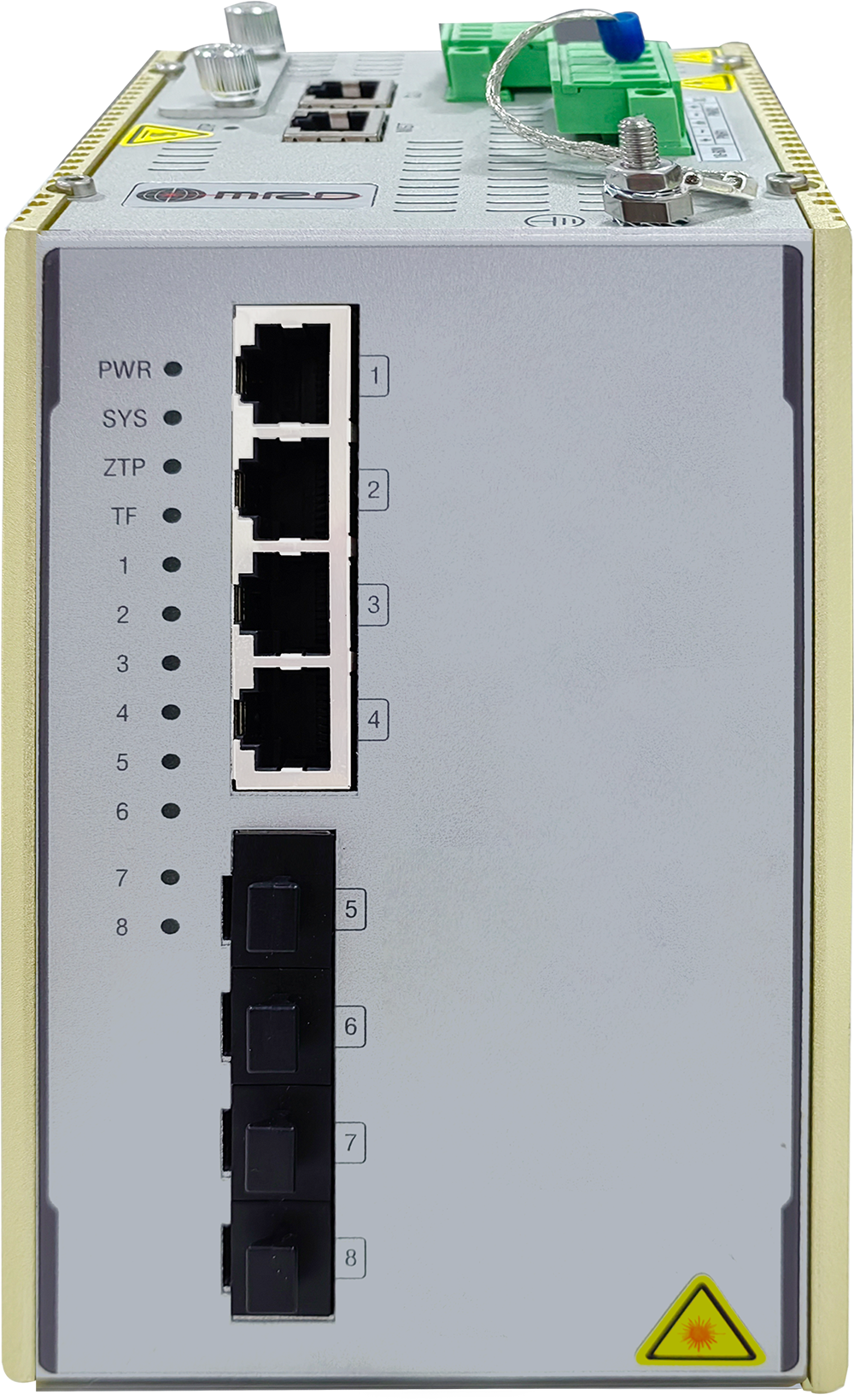
All-black 8-port DIN-rail Layer-3 industrial switch with Centauri software on HarmonyOS: 4×10/100/1000BaseT + 4×100/1000BaseX SFP (no SFP module), redundant dual negative-isolated power (18-60VDC), one relay alarm output
(250VAC 2A@250VAC or 125VDC 2A@30VDC), 1 MGT, 1 Console. Operating temperature -40°C~+85°C. IP40.
Patriot PAT300-HOSWFLY8
All-black Centauri HarmonyOS 12-port DIN-rail Layer-3 industrial switch: 8×10/100/1000BaseT + 4×100/1000BaseX SFP (no SFP module), redundant dual negative-isolated power (18-60VDC). One relay alarm (250VAC 2A@250VAC or 125VDC 2A@30VDC), 1 MGT, 1 Console. Operating -40°C~+85°C. IP40.
Patriot PAT300-HOSWFLY4S
All-black Centauri HarmonyOS 12-port DIN-rail Layer-3 industrial switch: 4×10/100/1000BaseT + 4×100/1000BaseX SFP (no SFP module) + 4 serial, redundant dual negative-isolated power (18-60VDC). One relay alarm (250VAC 2A@250VAC or 125VDC 2A@30VDC), 1 MGT, 1 Console. Operating -40°C~+85°C. IP40.
Tel: 86-21-58330762 Fax: 86-21-58330763
Hotline: 86-21-58330762
Zip: 201203
Email: sales@mrdcom.net
Address: No.123 Curie Road, China (Shanghai) Pilot Free Trade Zone




Copyright 2026 MRD Co LTD . All Rights Reserved Shanghai ICP No.12035199


