
Supports fault Bypass with switchover under 160 ms
Supports QoS for real-time traffic classification and priority
Supports LLDP for automatic topology discovery and visual management
Supports file management, log management, port statistics, 802.1Q VLAN
CRRC Standardized ETBN/ECN Onboard Switch
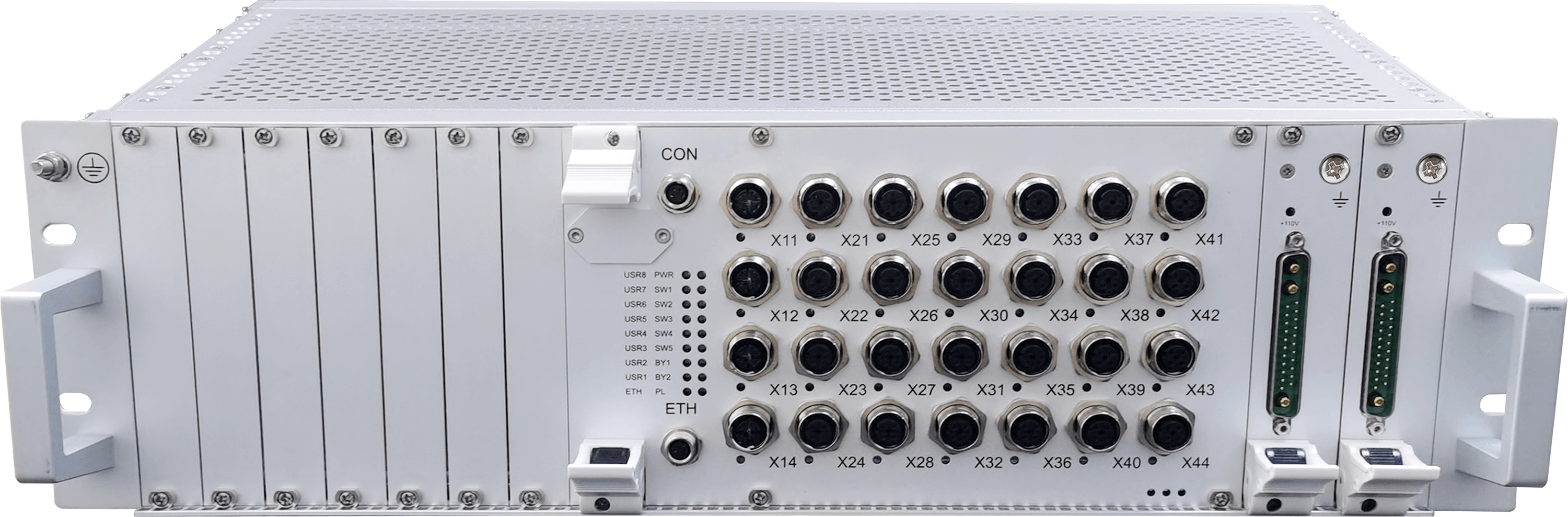
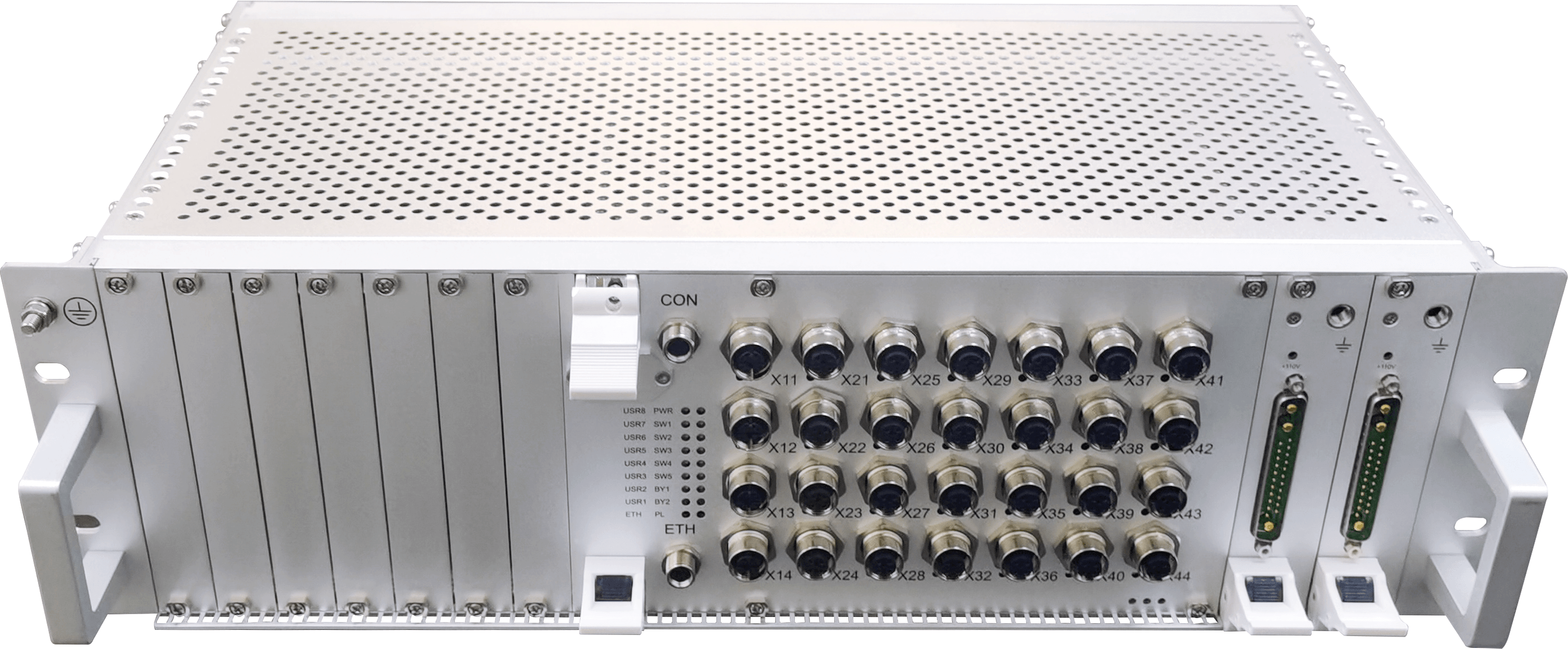
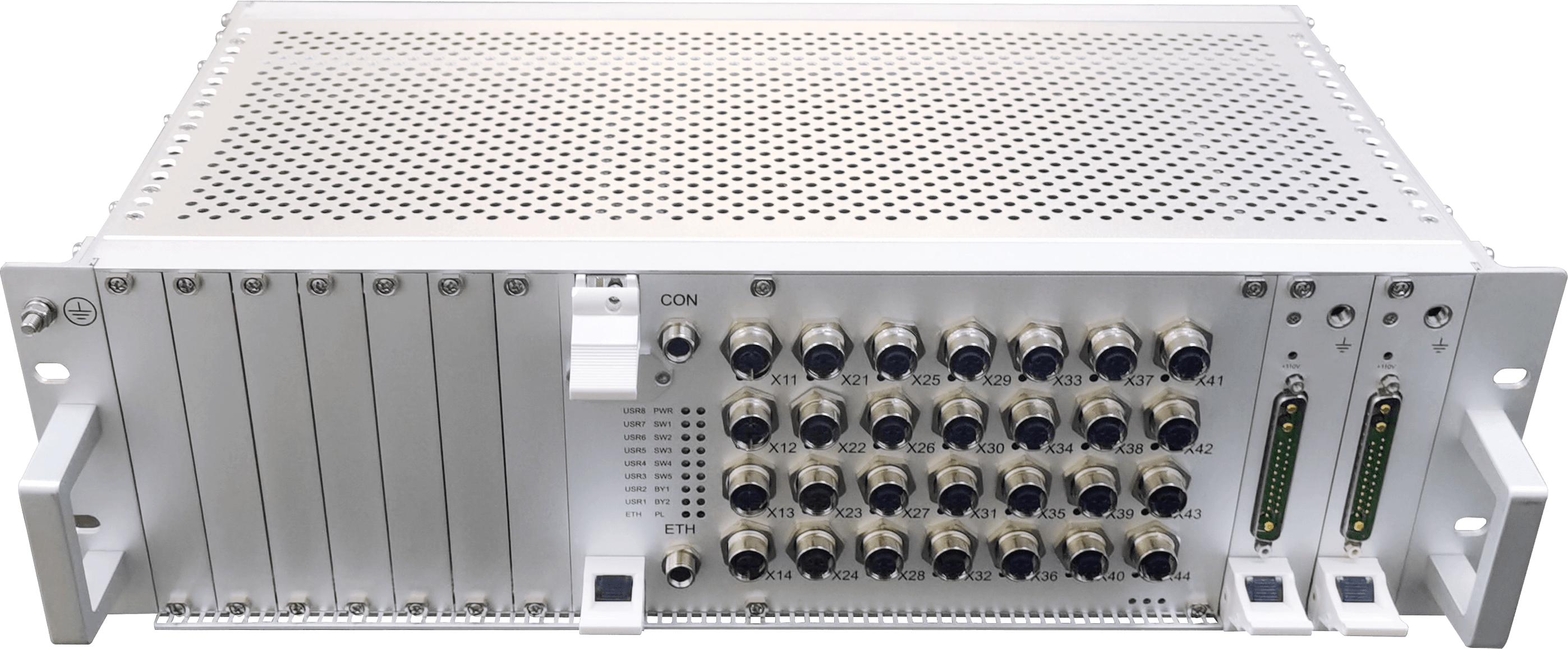
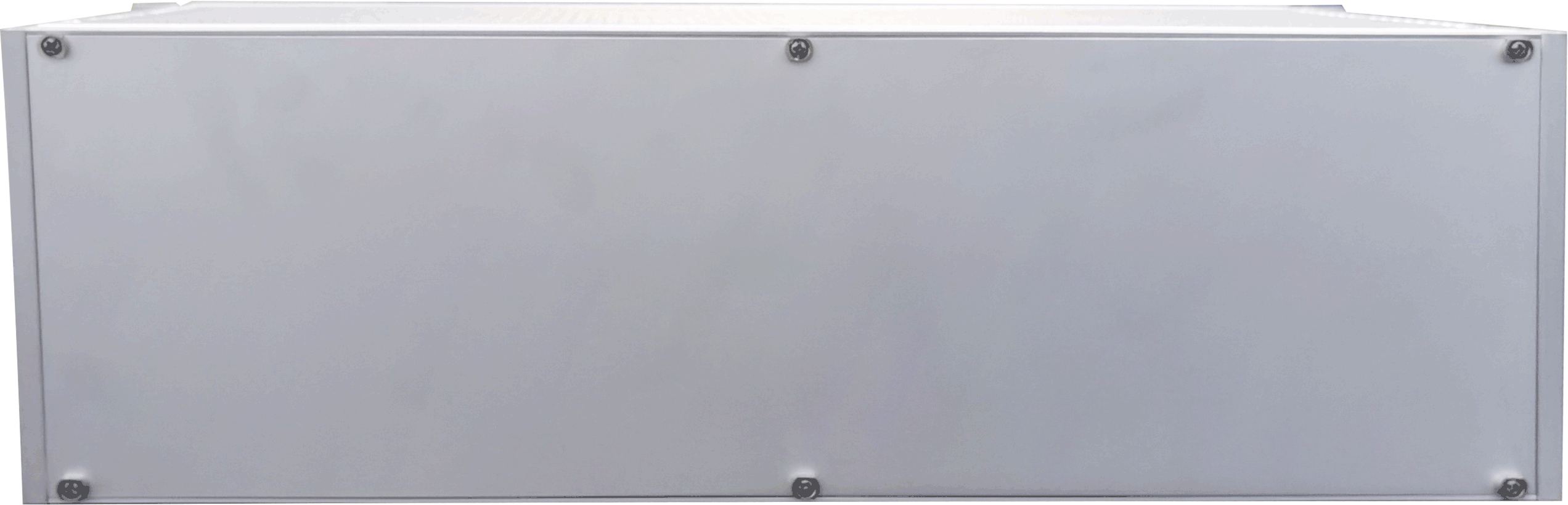
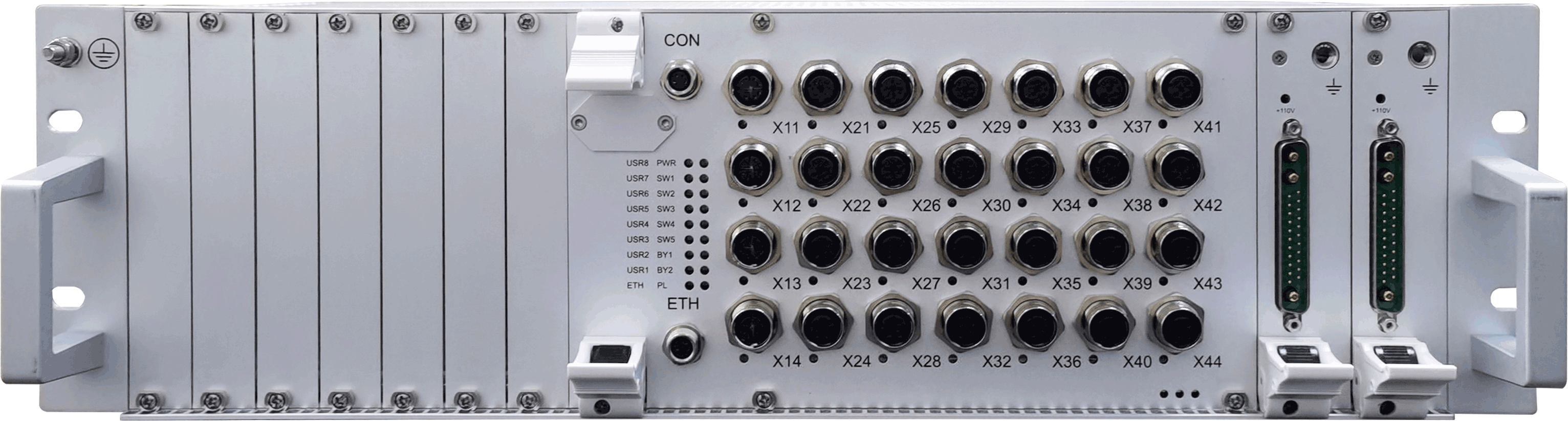
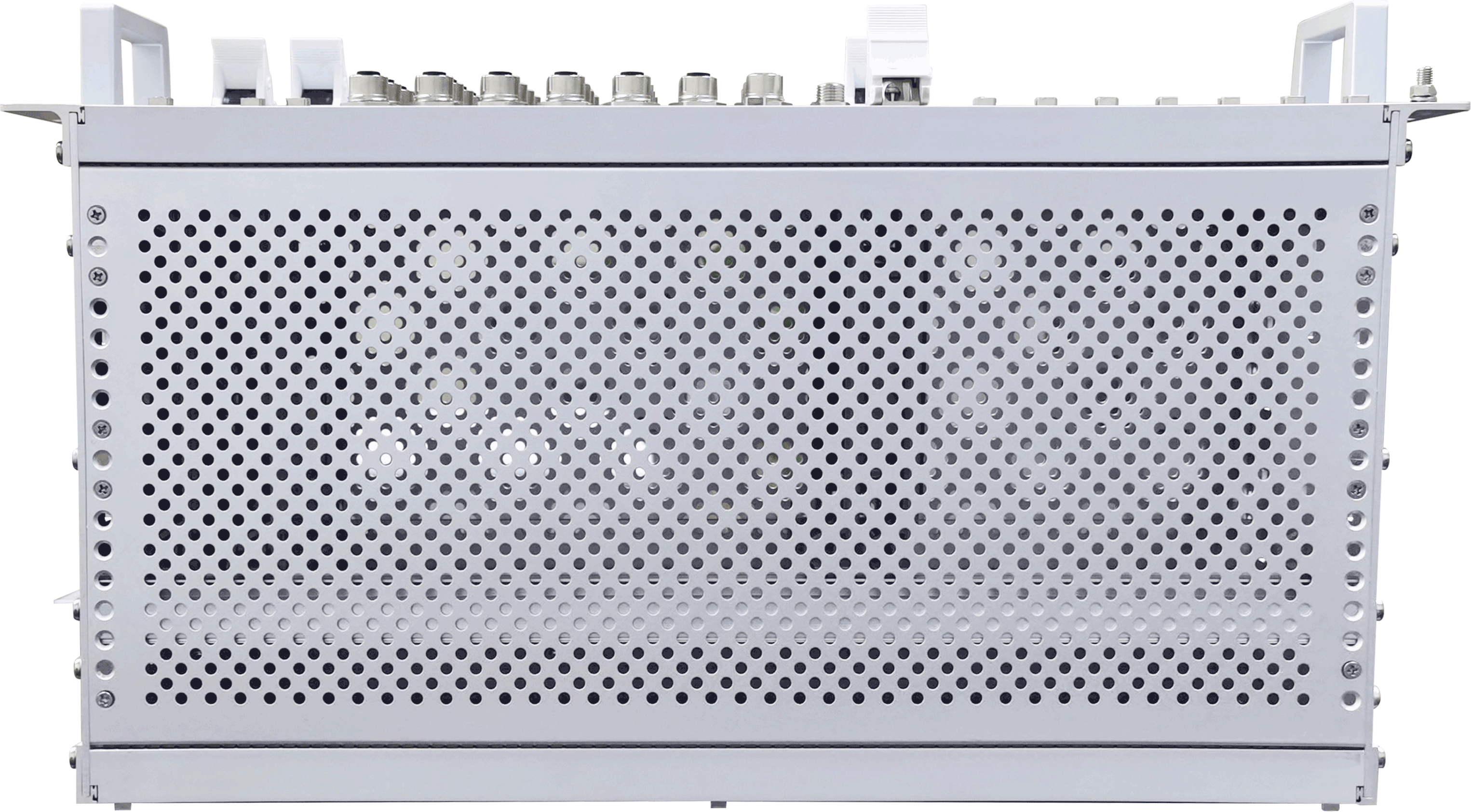
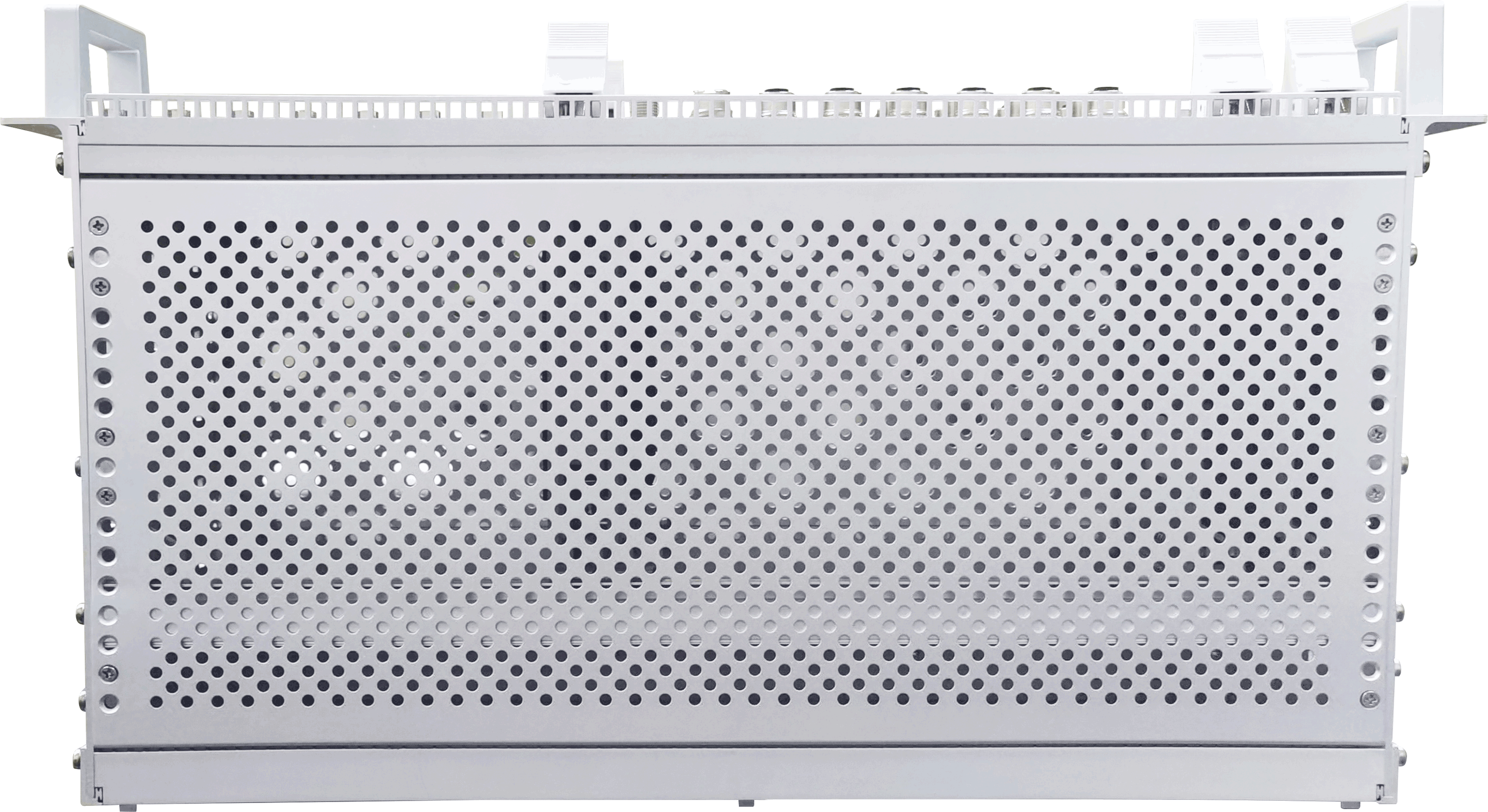
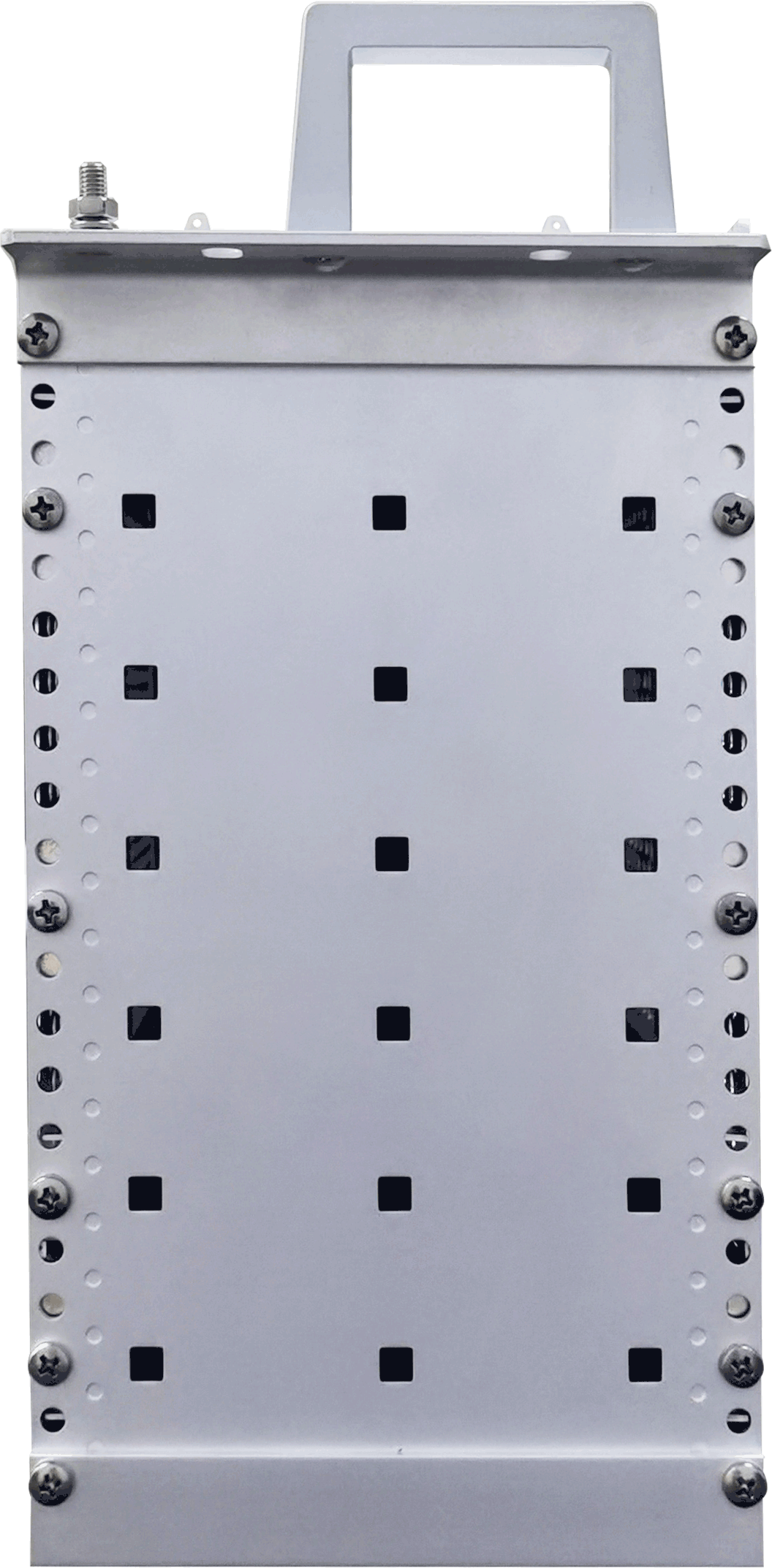
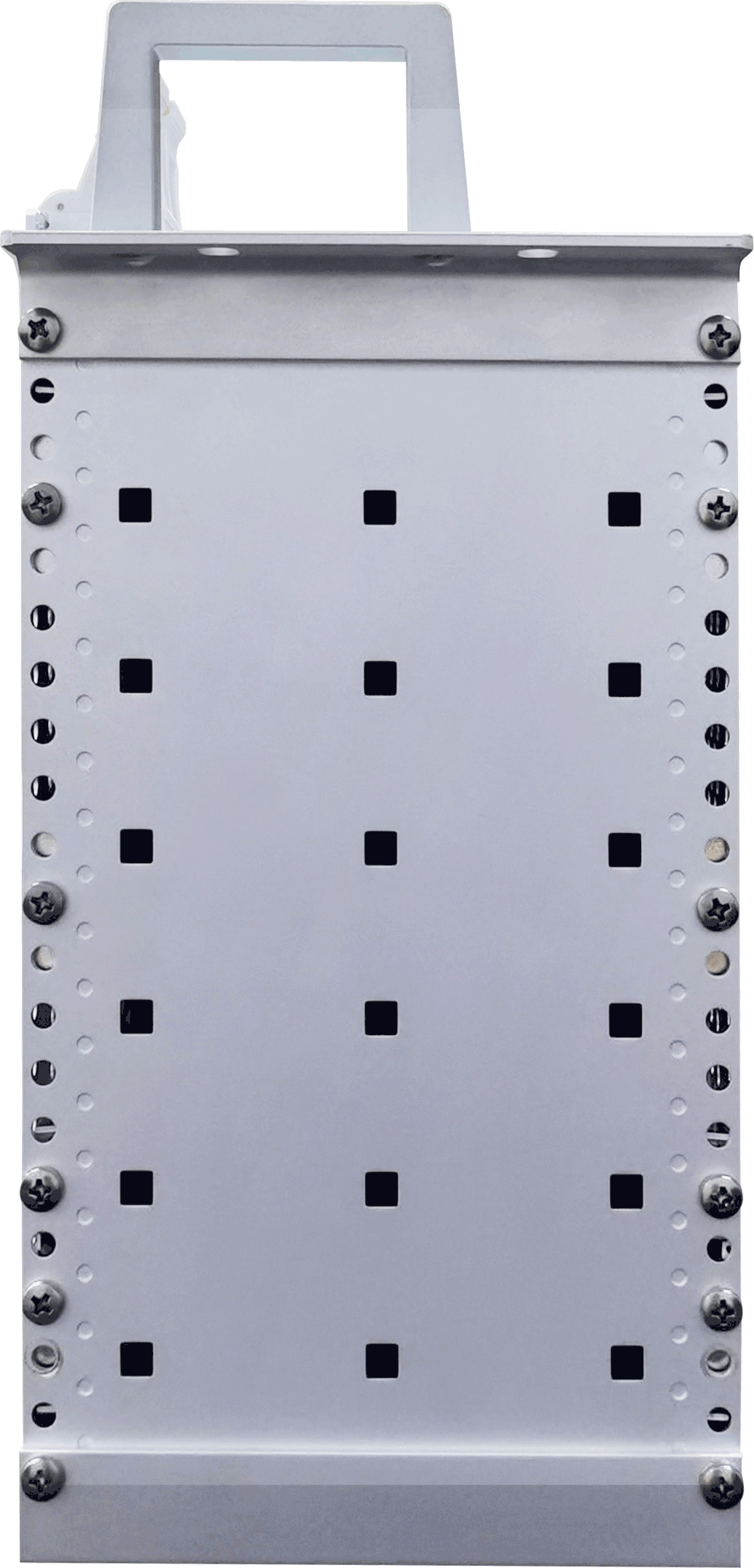
CRRC standardized ETBN/ECN onboard switch serves as passenger/driver cabin switches for standardized metro PIS projects. Standard 19-inch 3U chassis with all front-panel interfaces for cabinet install/service. Dual identical switch modules operate independently—removing one does not affect the other. Each switch offers 24×FE D-code + 4×GE X-code or 16×FE D-code + 4×GE X-code; GE ports support BYPASS against power-fail outages. Dual-version interval upgrades remain usable during power loss.
CRRC standardized ETBN/ECN onboard switch complies with IEC 61375-2-5 and IEC 61375-2-3, providing TTDP, TTDB, ECSP and TRDP for automatic IP assignment, route/topology learning, train topology confirm/modify and database query.
The cable is connected, but the port will not come UP / the link is down. What should I check?
+What are the PoE power specifications?
+Which ring protocols are supported, and what is the self-healing time?
+How should I choose between Layer-2 and Layer-3 industrial switches?
+Can non-OEM SFP optical modules work normally?
+How do I restore factory settings if I forget the device login password?
+What are the power supply requirements for industrial switches?
+What are the operating temperature range and protection rating of industrial switches?
+Compliant with IEC 61375-2-5 and IEC 61375-2-3
Switch boot time under 1 min
Supports fault Bypass with switchover under 160 ms
Supports QoS for real-time traffic classification and priority
Supports LLDP for automatic topology discovery and visual management
Supports interface TX/RX summary stats and port rate stats
Supports loop detection with dynamic master election to prevent loops and broadcast storms
Supports file management, log management, port statistics, 802.1Q VLAN
Supports port mirroring and port filtering with MAC-based frame filtering
Supports link aggregation, bandwidth management, flow control, port isolation, static multicast, IGMP Snooping, etc.
Supports link aggregation
Supports fault-log power-loss storage and export
Supports RTC; clock retained after power loss
PCB with conformal coating (3-proof)
Operating temperature -40 to +85°C
MTBF over 4500,000 hours
Industrial-grade Switch
CRRC Standardized ETBN/ECN Onboard Switch
IEEE 802.3 CSMA/CD method and physical Layer
specifications — CSMA/CD and PHY description
IEEE 802.1p Priority Queuing
IEEE 802.1q VLAN tagging
IEEE 802.1d Spanning Tree Algorithm
IEEE 802.1w Rapid Spanning Tree
IEEE 802.1s Multiple Spanning Tree
IEEE 802.3ab
IEEE 802.3ac VLAN Tagging
IEEE 802.1x Authentication
IEEE 802.3ad Link Aggregation
IEEE 802.3x Flow Control
IEEE 802.3 Ethernet
IEEE 802.3u Fast Ethernet
IEEE 802.3z Gigabit Ethernet
IEEE 802 Networks
RFC 768 UDP
RFC 791 IP
RFC 792 ICMP
RFC 793 TCP
RFC 826 ARP
RFC 904 Exterior Gateway Protocol Formal Specifica- tion
RFC 1027 Using ARP to Implement Transparent Sub- net Gateways
RFC 1058 RIP
RFC 1059, 1119 NTPv1/2
RFC 1112 IGMP IP
RFC 1191 Path MTU Discovery
RFC 1256 ICMP Router discovery protocol ICMP
RFC 1267 A Border Gateway Protocol 3 (BGP-3)
RFC 1388 RIP Version 2 Carrying Additional Infor- mation
RFC 1587 OSPF NSSA
RFC 1765 OSPF Database Overflow OSPF
RFC 1812 Requirements for IP Version 4 Routers IPv4
RFC 1994 PPP Challenge Handshake Authentica- tion Protocol (CHAP)
RFC 2068 HTTP
RFC 213 DHCP Server DHCP
RFC 2139 RADIUS Accounting
RFC 2236 IGMPv2
RFC 2328 OSPF V2
RFC 2338 VRRP
RFC 2362 PIM-SM/DM
RFC 2370 The OSPF Opaque LSA Option OSPF
RFC 2474 DiffServ Precedence
RFC 2475 DiffServ Core and Edge Router Func- tions
RFC 2597 DiffServ Assured Forwarding
RFC 2598 DiffServ Expedited Forwarding
RFC 2644 Directed Broadcasts
RFC 2865 Remote Authentication Dial in User Ser- vice (RADIUS)
RFC 3046 DHCP Relay Agent Information Option DHCP
RFC 3222 Forwarding Information Base (FIB)
GMRP GARP
GVRP GARP
SSH2 Secure Shell 2
IGMP snooping IGMP
SNMPv1/v2c/v3
TTDP Train Topology Discovery Protocol
TTDB Train Topology Database Train Topology Database
ECSP ETB Control Service Provider ETB control service provider
TRDP Train Real-time data protocol
Industrial-grade Switch
CRRC Standardized ETBN/ECN Onboard Switch
| Backplane Bandwidth | 68Gbps |
| Transmission method | store-and-forward |
| MAC Address Table | 16K |
| cache | ≥4Mbit |
| Switching Rate | 148,800 pps/FE port; 1,488,000 pps/GE port |
| Management Methods | Browser, serial, STD-17 MIB-II, STD-58 SMIv2, STD-59 RMON, STD-62 SNMPv3, SNMPv2c, SNMPv1, RFC2668 MAU, RFC2925 Ping MIB, MRD Private MIBs ,TELNET |
| Diagnostics | Indicators, logs, relay, RMON, port mirroring, TRAP |
| Redundancy | STP, RSTP, MSTP, link aggregation |
| time synchronization | SNTP |
| other | 4K VLANs, IPv4/IPv6 multicast, storm control, Jumbo Frame |
| Input voltage | 110 VDC (77–137.5 VDC), reverse-polarity protection |
| Product dimensions | 441.8mm×132.5mm×230mm |
| protection rating | IP20 |
| MTBF | over 4500,000 hours Temperature Characteristics |
| Storage Temperature | -40℃ ~ 85℃ |
| operating temperature | -40℃ ~ 85℃ |
| Relative Humidity | 5% ~ 95%, non-condensing |
| Shock & Vibration | IEC 61373 |
| free fall | IEC 60068-2-31 |
| circuit board | Compliant with IPC standards Industrial-grade Switch CRRC Standardized ETBN/ECN Onboard Switch |
| EMC | IEC(EN)61000-4-2, Level 3 IEC(EN)61000-4-4, Level 3 IEC(EN)61000-4-5, Level 3 IEC(EN)61000-4-6, Level 3 IEC(EN)61000-4-8, Level 5 IEC61000-4-29, Class B |
| rail industry | EN 50121; EN50155 |
| High temperature test | IEC 60068-2-2 |
| Low temperature test | IEC 60068-2-1 |
| Alternating heat and humidity test | IEC 60068-2-30 |
| Insulation test | EN 50155-13.4.9 |
| Withstand voltage test | EN 50155-13.4.9 |
| Power Performance Test | EN 50155 |
| Salt spray test | EN 50155 |
| Fire protection and safety | EN45545; EN50153 Industrial-grade Switch CRRC Standardized ETBN/ECN Onboard Switch |
| model | Product Specification |
| TCC4100-CRECNL3 | CRRC standardized 3U rackmount ETBN/ECN Layer-3 ECNN-A switch: 24×FE D-code + 4×GE X-code with BYPASS, redundant hot-swap dual power, meeting CRRC ETBN networking requirements. |
| TCC4100-CRECNL2 | CRRC standardized 3U rackmount ETBN/ECN Layer-2 ECNN-B switch with dual switch modules (each: 16×FE D-code + 4×GE X-code with BYPASS), redundant hot-swap dual power, meeting CRRC ETBN networking requirements. |
Hotline: 86-21-58330762
Zip: 201203
Email: sales@mrdcom.net
Address: No.123 Curie Road, China (Shanghai) Pilot Free Trade Zone




Copyright 2026 MRD Co LTD . All Rights Reserved Shanghai ICP No.12035199


